How to Remove Bird Droppings Without Damaging Paint
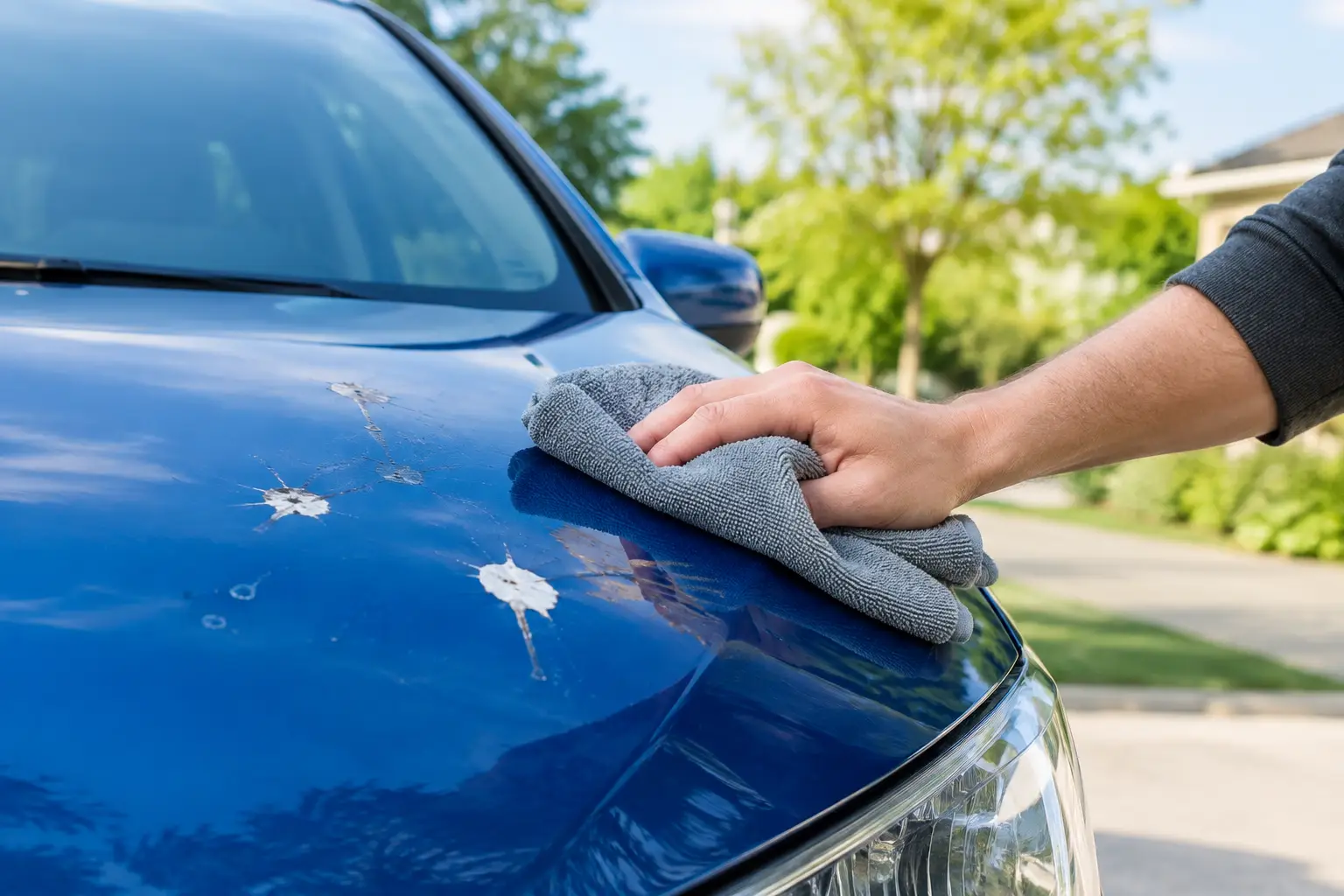
A bird dropping can do more than ruin the look of a freshly cleaned vehicle. If you do not remove bird droppings promptly and correctly, the residue can stain, dull, or etch your clear coat. That risk is especially real on dark paint, vehicles parked outdoors, and panels heated by the Michigan sun.
The good news is that most bird-dropping damage is preventable. The key is avoiding the rushed approach: dry wiping it away with a napkin, scrubbing a hardened spot, or using a harsh cleaner that creates a bigger problem than the mess itself.
Why Bird Droppings Can Damage Automotive Paint
Bird droppings contain uric acid, organic material, and grit. As the residue dries, it bonds to the surface and can soften or mark the clear coat underneath. Heat accelerates the process. A vehicle parked in direct sunlight can have a hot hood, roof, or trunk panel, allowing the contamination to bake onto the finish.
The damage is not always caused by acid alone. Dirt and small particles trapped in the dropping can scratch paint when they are rubbed across the panel. That is why a dry towel, paper napkin, or quick swipe with a finger is never the right move.
A recent ceramic coating can make cleanup easier because contamination has less grip on a protected surface. Paint protection film can add another layer of defense on high-impact areas. Neither service makes paint invincible, though. Bird droppings should still be removed as soon as practical.
How to Remove Bird Droppings Safely
Start by giving the spot moisture and time. If you are at home, use a gentle stream of water or a detail spray designed for automotive paint. Let the product soak into the residue for a minute or two so it can soften. Do not attack the spot immediately with pressure.
Once the dropping is loose, use a clean, high-quality microfiber towel folded into quarters. Lift the contamination away with minimal contact instead of scrubbing back and forth. Use a fresh section of the towel as needed. If residue remains, apply more lubricant and repeat the process rather than pressing harder.
For a larger spot or a dropping that has dried on the vehicle, a rinseless wash solution is often a smart option. Saturate the area, allow the solution to dwell, then gently lift the material away with a clean microfiber towel. Follow with a light wipe using a separate towel to remove any remaining film.
If you are away from home, a dedicated emergency detail kit is useful to keep in the vehicle. A small bottle of detail spray, a few clean microfiber towels, and a sealed bag for used towels can help you address fresh contamination before it has time to sit on the paint.
Do Not Clean a Hot Panel Aggressively
A hot vehicle changes the process. Spraying cold water or cleaner onto extremely hot paint can cause rapid evaporation, leaving residue behind before it has time to soften the dropping. The panel may also be too hot to safely handle with a microfiber towel.
Whenever possible, move the vehicle into shade and let the surface cool first. If that is not an option, lightly mist the area several times rather than flooding it, then use a lubricated microfiber towel with a gentle touch. If the contamination has already hardened, it is better to wait until you can wash the panel properly than to grind it into the finish in a parking lot.
What Not to Use on Bird Droppings
Improvised cleaning methods can create scratches, staining, or damage to protective coatings. Avoid using household glass cleaner, abrasive sponges, stiff brushes, disinfecting wipes, or paper towels. These materials may be too harsh for automotive clear coat, and they usually do not provide enough lubrication to safely lift contamination.
Dish soap is not a great routine choice either. While it may remove some residue, it can strip away waxes and may leave the paint unprotected. A pH-balanced car shampoo, rinseless wash product, or quality detail spray is designed to clean without unnecessarily compromising the finish.
Also avoid using a drive-through car wash as the only response to bird droppings. It may remove visible residue, but brushes can drag remaining grit across the paint. If the vehicle has a fresh spot, pre-treat it first and inspect the panel afterward.
Fresh Droppings vs. Etched Paint
When caught early, bird droppings typically clean off without leaving evidence behind. After several hours or days, particularly during hot weather, you may notice a dull ring, a hazy outline, or a rough patch after washing. This can mean the clear coat has been etched.
A light mark may improve with a professional polish or paint correction service. More severe etching can require a multi-step correction process, and there are cases where the damage has penetrated too deeply for polishing alone to completely remove it. The only way to know is to inspect the paint under proper lighting.
Do not assume an etched spot will disappear on its own. Washing removes contamination, but it cannot restore clear coat that has been physically marked. Addressing it early can prevent the area from collecting more dirt and looking worse over time.
Protect Your Vehicle Between Washes
The most practical defense is a consistent maintenance routine. Wash the vehicle regularly, especially if it is parked outdoors or beneath trees, utility lines, or common bird perches. A clean, protected surface gives contaminants less opportunity to bond aggressively.
Wax, sealants, and ceramic coatings each provide different levels of durability and water behavior. A wax can add short-term gloss and protection, while a ceramic coating offers longer-lasting chemical resistance and easier maintenance. Paint protection film is especially valuable on vulnerable areas because it adds a physical barrier that can help preserve the finish against road debris, staining, and everyday wear.
Protection does not eliminate the need for prompt cleanup. Think of it as buying time, not permission to leave contamination on the vehicle. The best result comes from pairing quality protection with proper washing habits.
A Simple Response Plan
If you see a fresh dropping, remove it that day with detail spray and a clean microfiber towel. If it has dried, soak it thoroughly before lifting it away. If you see a dull outline after cleaning, avoid aggressive DIY polishing and have the panel evaluated by a detailing professional.
For Metro Detroit drivers, this matters year-round. Summer heat can bake contaminants onto paint quickly, while winter road film makes it harder to spot damage until the next wash. Keeping a basic cleanup kit in the vehicle is a small step that can help protect a much larger investment.
A clean vehicle should not require constant worry, but it does reward quick attention. Treat bird droppings like the time-sensitive contamination they are, and your paint will stay glossier, easier to maintain, and better prepared for the miles ahead.