PPF Versus Repainting: Which Protects Your Car?
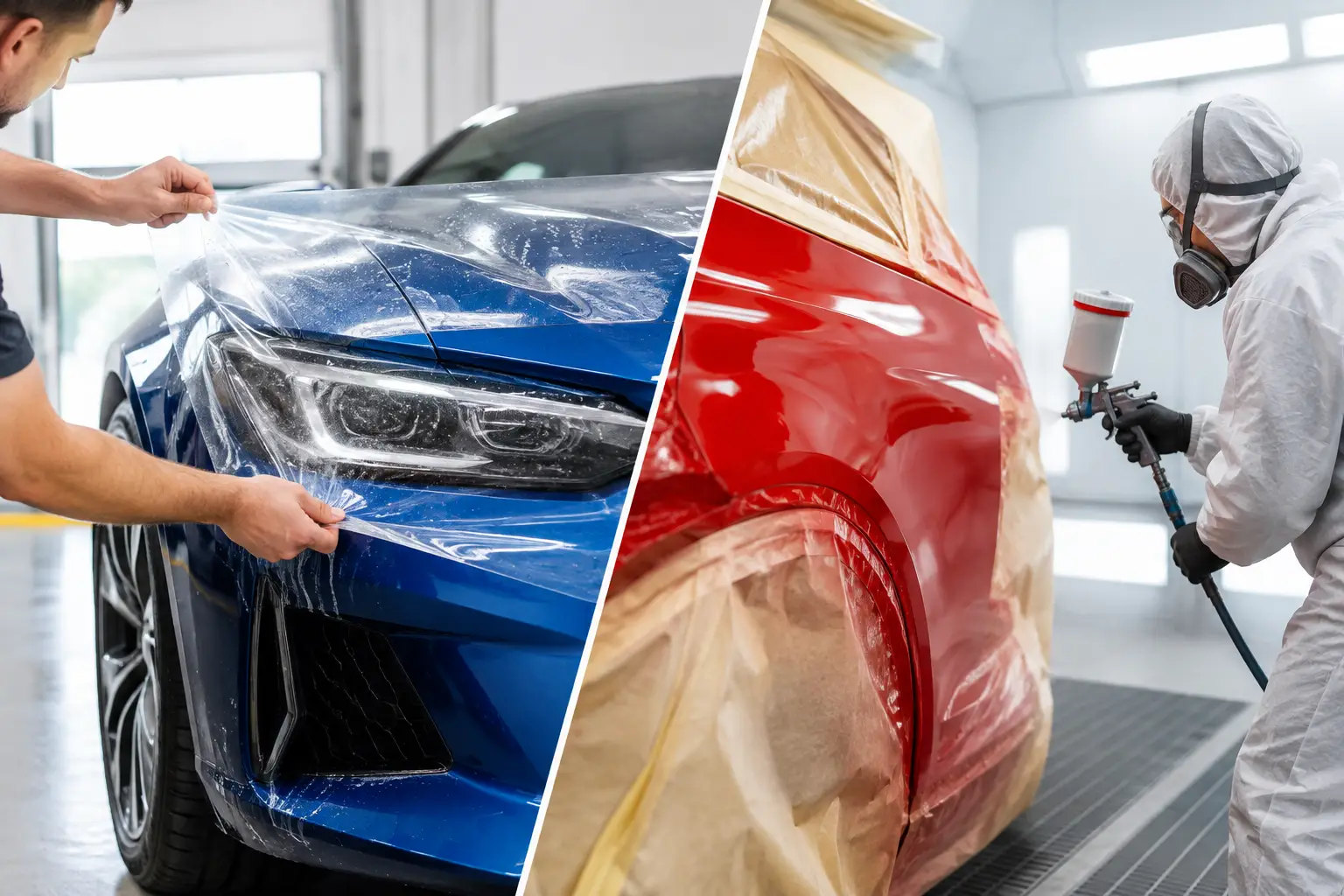
A fresh paint chip on a hood or bumper changes how you see the entire vehicle. For Metro Detroit drivers, that damage can come quickly: loose aggregate, highway construction, salt, parking lot scuffs, and winter road debris all take their toll. The decision around PPF versus repainting is not simply about making a panel look better. It is about whether you are restoring damage that has already happened or preventing the next round of it.
Both services have a place. Repainting can be the right repair for failing, deeply damaged, or previously repaired paint. Paint protection film, commonly called PPF or clear bra, is designed to preserve healthy factory paint against the damage daily driving creates. The better choice depends on the condition of the vehicle, your ownership plans, and the level of protection you expect.
PPF Versus Repainting: The Core Difference
Repainting is a corrective process. A body shop sands, repairs, primes, color-matches, and clears the affected panel or panels to restore their appearance. It is often necessary after collision damage, severe scratches, corrosion, peeling clear coat, or damage that has gone through the paint layer.
PPF is preventive. It is a transparent urethane film professionally applied over painted surfaces to absorb the impact of small road debris, resist staining, and reduce visible damage from everyday use. Quality films also offer self-healing properties, allowing light swirl marks and minor surface scratches to diminish with heat from the sun or warm water.
That distinction matters. A repaint can make one damaged area look new again, but it does not stop the same area from getting chipped next season. PPF protects the paint you have, including fresh paint after the proper curing period.
When Repainting Is the Right Answer
Paint protection film cannot cover up every paint problem. Because it is clear, it will not correct deep scratches, dent damage, oxidation, peeling clear coat, rust, or poor-quality prior repairs. Installing film over compromised paint may make the condition more noticeable and can create adhesion concerns.
Repainting is usually the appropriate route when damage has penetrated the color layer or exposed primer or bare metal. It may also be required after a collision repair, when a panel has significant cracking, or when a vehicle has widespread clear-coat failure. In those cases, the goal is to restore a stable, presentable surface before considering protection.
Color matching is one of the main variables. Factory paint has aged differently across every panel due to sun exposure, wear, and past detailing. A skilled shop can produce an excellent match, but metallic and pearl paints can be especially demanding. Blending into adjacent panels may be needed for the repair to look consistent in changing light.
A repaint also affects vehicle history differently than a film installation. Quality paintwork is not inherently a problem, especially when it is properly documented. Still, original factory paint is a selling point for many buyers, collectors, and appraisers. Preserving it where possible can support confidence when it is time to sell or trade.
Why PPF Makes Sense on Healthy Paint
PPF is most valuable before visible damage becomes extensive. A new vehicle is an obvious candidate, but it is not the only one. A well-kept daily driver, a leased vehicle, a performance car, or a recently paint-corrected vehicle can all benefit from targeted film coverage.
The front end takes the majority of impact damage. The bumper, hood, front fenders, mirror caps, rocker panels, and areas behind the wheels see constant exposure to stones, bugs, road grime, and salt spray. Protecting those zones can keep the vehicle looking substantially cleaner over years of driving.
Unlike a repaint, PPF does not alter the underlying factory finish. Properly installed film is designed to sit nearly invisibly over the paint, with careful edge wrapping and panel-specific coverage helping create a refined appearance. It also provides a physical barrier, which ceramic coating alone cannot match against rock chips.
For owners who want more than a partial solution, full-front or full-vehicle PPF coverage can be tailored to how the vehicle is used. A weekend sports car may need different coverage than an SUV that commutes daily on I-96, I-275, or M-14. The right package is based on real exposure, not a one-size-fits-all recommendation.
PPF Is Not a Substitute for Paint Correction
Film can protect paint, but it does not replace the preparation process. Light scratches, haze, water spotting, and swirl marks may need paint correction before installation. Otherwise, those defects remain beneath the film.
This preparation is especially important on darker colors, where paint defects are easier to see. A professional assessment should identify whether the paint is healthy enough for film and whether correction will improve the final result. The goal is to protect a finish worth preserving, not merely cover it.
Comparing Cost Beyond the Initial Invoice
At first glance, repainting one panel may appear less expensive than installing PPF across multiple panels. That comparison can be misleading because the services solve different problems. A repaint addresses current damage. PPF helps reduce future repairs, touch-ups, and depreciation caused by chipped or worn paint.
Costs for repainting vary widely based on the extent of damage, panel material, paint color, blending requirements, and bodywork needed before spraying. A minor bumper repair is very different from repairing a hood with rust, dents, and multiple stone chips. The process can also involve more downtime while paint cures and refinishing work is completed.
PPF pricing depends on coverage area, vehicle shape, film type, edge work, and paint preparation. Partial-front coverage offers focused protection for drivers with a practical budget. Full-front coverage provides more complete defense for the areas most likely to be damaged. Full-vehicle film is often chosen by owners of high-value, exotic, or deeply sentimental vehicles.
The value calculation becomes clearer over time. If your vehicle is likely to spend several Michigan winters on the road, repeated paint repairs can add up. If you trade vehicles frequently, PPF may help maintain a stronger appearance at appraisal. If you are repairing a single deep scrape on an older car that you plan to keep only briefly, repainting that panel may be the more sensible use of your budget.
Appearance, Durability, and Maintenance
A properly completed repaint can look excellent, but its durability depends on the repair process, materials, and care afterward. Fresh paint typically needs time to cure before it can be polished, coated, or protected with film. Applying protection too early can interfere with outgassing and long-term adhesion.
Modern PPF is built for the realities of vehicle ownership. It can resist discoloration, road staining, and light surface marring while preserving gloss. Some options are available in matte or satin finishes for owners who want to change the look of the vehicle without permanently repainting it.
Neither option eliminates the need for maintenance. PPF should be washed with proper techniques, and edges should not be aggressively targeted with a pressure washer. Repainted panels also need careful washing and routine protection. Ceramic coating can be applied over PPF or paint to improve water behavior, ease cleaning, and add chemical resistance, but it does not replace the impact protection of film.
A Smart Order of Operations for Damaged Paint
When a vehicle already has chips or scratches, the best solution is often not strictly PPF or repainting. It can be repainting followed by protection. First, repair the panel to a high standard. Then allow the paint to cure according to the refinisher's guidance. Finally, install PPF on the repaired area and surrounding high-impact panels to reduce the odds of repeating the repair.
For lighter defects, paint correction and touch-up work may be enough before film installation. This approach can preserve more original paint than a full repaint while significantly improving how the vehicle presents. The right call comes from evaluating the damage in person rather than choosing based on a photo or a generic package.
How to Choose for Your Vehicle
Start with the paint condition. If there is exposed metal, peeling clear coat, deep gouges, rust, or collision damage, repair is the priority. If the paint is in good condition and you want to defend it from future chips and wear, PPF is the stronger long-term protection choice.
Then consider where and how you drive. A garage-kept weekend vehicle may need limited coverage. A daily driver covering Metro Detroit highways through every season faces much more risk. Ownership length matters, too. The longer you plan to keep a vehicle, the more valuable it can be to preserve the factory finish from the start.
The best protection plan should feel proportionate to the vehicle and your goals. MYNT Customs can assess the paint, identify the areas receiving the most abuse, and recommend a solution that protects your investment without overselling coverage you do not need. A well-timed decision before the next chip, scrape, or salt season can keep your vehicle looking like the one you were proud to bring home.