Full Front Versus Bumper PPF: Which Fits?
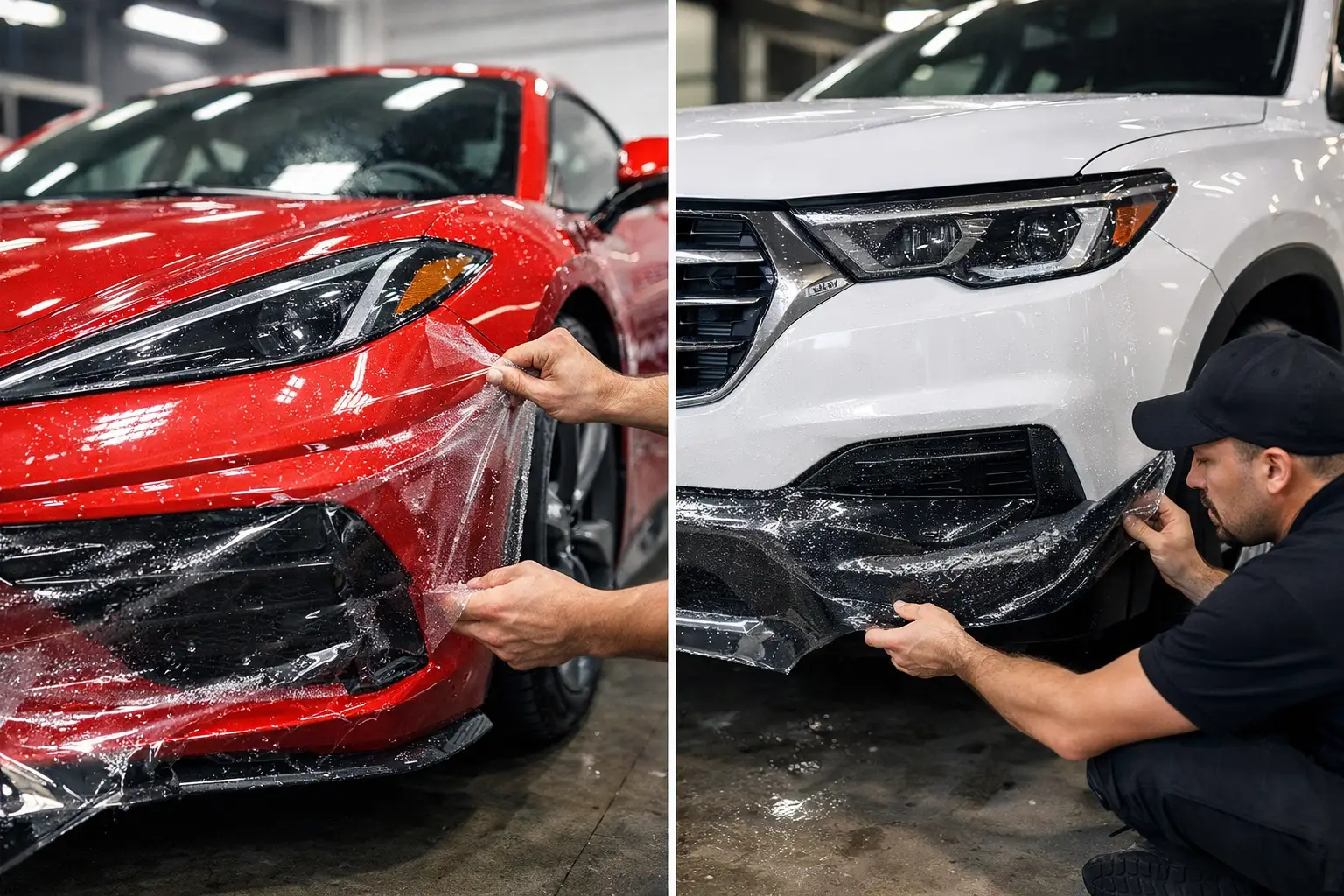
A freshly painted bumper can take a beating fast on I-96, I-275, and the everyday roads around Metro Detroit. When comparing full front versus bumper PPF, the real question is not which package is better in every case. It is which areas of your vehicle are most likely to take damage, how long you plan to own it, and how much protection makes sense for your budget.
Paint protection film is a clear, durable urethane film applied over painted surfaces. It is designed to absorb the impact of small road debris, reduce visible rock chips, and help shield paint from bugs, road grime, salt residue, and light scuffs. Both bumper-only and full-front packages provide meaningful protection. The difference is how far that protection extends once debris gets past the front bumper.
Why the Front of Your Vehicle Takes the Most Damage
The front end sits directly in the line of fire. Tires from vehicles ahead throw gravel, sand, salt, and broken pavement backward at highway speed. Bugs and road film also collect on the bumper, hood, mirrors, and lower rocker areas.
On many vehicles, the bumper is only the first surface exposed. The leading edge of the hood, front fenders, headlights, and mirror caps are all vulnerable to chips. Performance vehicles with lower front ends may see even more impact damage, especially near the bumper corners and lower splitter area.
Michigan weather makes the decision more relevant. Winter road treatments and spring road debris can be hard on paint, while frequent highway driving raises the odds of chips across more than one panel. A bumper package addresses the highest-impact zone. A full-front package creates a more complete barrier for the areas that follow.
Full Front Versus Bumper PPF: What Each Package Covers
Coverage can vary slightly by vehicle shape and installer, so it is worth confirming exactly what is included before booking. In general, the two options are straightforward.
Bumper PPF Coverage
A bumper PPF package protects the painted front bumper. Depending on the vehicle and package, it may also account for details such as painted trim, sensor cutouts, grille-adjacent surfaces, or a lower lip. This is the most focused and budget-conscious way to protect the area that sees the most direct debris strikes.
Bumper coverage is a smart fit for drivers who spend most of their time on local roads, lease a vehicle, or want targeted protection without committing to a larger installation. It also makes sense on vehicles where the hood and fenders already have minor wear and the owner wants to prevent the front bumper from getting worse.
Its limitation is simple: it stops at the bumper. A stone that clears the bumper can still chip the hood edge, fender arches, mirror caps, or headlights. On a light-colored vehicle, that damage may be less noticeable at first. On darker paint, fresh chips can stand out quickly.
Full-Front PPF Coverage
A full-front PPF package typically includes the front bumper, full hood, full front fenders, and mirror caps. Some packages can also include headlights, depending on the material and the vehicle. This coverage protects the surfaces most likely to show highway wear as a group rather than treating the bumper as an isolated panel.
Full-panel coverage also produces a cleaner finished appearance. Because film edges are placed at natural panel boundaries instead of partway up a hood or fender, there are fewer visible transition lines where dirt or wax residue can collect. That is especially valuable on black, deep blue, red, and other darker colors that highlight surface imperfections.
For a new vehicle, a luxury model, or a daily driver that sees regular freeway mileage, full-front coverage is often the practical long-term choice. It protects more of the original finish before chips begin, which can help the vehicle present better when it is time to trade, sell, or return a lease.
The Cost Difference Is Really a Coverage Difference
Bumper PPF costs less because it uses less material and requires less installation time. It offers strong value when your goal is to protect the most exposed panel first. Full-front PPF requires more preparation, more film, and more precision across multiple panels, so it is a larger investment.
The right way to look at the difference is not simply the upfront price. Consider the cost of correcting paint chips later. Touch-up paint can reduce their visibility, but it rarely restores the original finish completely. Repainting a bumper, hood, or fender can also introduce color-match concerns, especially as factory paint ages.
For a vehicle you expect to keep for several years, the extra coverage can be easier to justify. For a short-term lease or a vehicle used mostly for low-speed local trips, bumper coverage may provide the protection you need without overspending.
Choose Based on How You Actually Drive
A full-front package is generally the stronger choice if you commute on freeways, travel frequently, follow construction traffic, or drive a vehicle with paint you want to preserve in near-new condition. It is also well suited to enthusiasts who notice every chip on a clean hood or fender.
Bumper PPF is often enough when the vehicle has limited highway exposure, is a short-term lease, or needs a focused protection upgrade. It can also be a logical starting point when budget is the deciding factor. Protecting one high-impact area properly is better than spreading a limited budget across partial coverage that leaves key surfaces exposed.
Vehicle design matters, too. A tall SUV or truck may take more bumper and hood-edge impacts. A low sports sedan may be especially vulnerable around the bumper, lower valance, and front fender arches. Some owners also add rocker panel protection because those areas are blasted by debris from their own tires. That is not automatically necessary, but it is worth discussing if the vehicle has wide tires, aggressive fitment, or frequent highway use.
What PPF Can and Cannot Do
Quality PPF is made to handle normal driving abuse better than unprotected paint. Many modern films have self-healing top coats that can help fine wash marks and light surface scratches become less visible with heat. The film also adds a sacrificial layer between your paint and common contaminants.
It is not armor plating. A sharp impact, deep scrape, collision, or severe gouge can still damage the film and potentially the paint underneath. PPF also will not correct pre-existing rock chips, deep scratches, oxidation, or poor paintwork. Those issues should be evaluated and addressed before installation whenever possible.
Film care is also part of the ownership experience. Wash the vehicle regularly, avoid abrasive brushes, and remove bug residue and bird droppings promptly. PPF makes routine cleanup easier, but it still benefits from proper detailing practices. Ceramic coating can be applied over PPF for added gloss and easier maintenance, although it does not replace the impact protection of film.
Installation Quality Matters as Much as Coverage
The package name alone does not determine the result. Proper preparation, panel cleaning, careful alignment, and clean edge work all affect how the film looks and performs. A professional installer should inspect the paint first, explain the coverage boundaries, and identify any existing chips or defects that may remain visible beneath a clear film.
At MYNT Customs, the goal is not simply to place material on the vehicle. It is to match coverage to how the owner uses the vehicle and deliver a finish that looks intentional, clean, and properly fitted. That means considering paint color, vehicle body lines, mileage, driving conditions, and ownership plans before recommending a package.
A Simple Way to Make the Decision
If your primary concern is protecting the panel that receives the most direct road abuse, choose bumper PPF. It is targeted, effective, and a practical entry point into paint protection.
If you want to preserve the entire high-impact front end, drive regularly on Metro Detroit freeways, or own a vehicle whose appearance and resale value matter to you, full-front PPF is usually the better investment. The hood, fenders, and mirrors are too exposed to ignore once you see how quickly chips can accumulate.
The best package is the one that fits your vehicle before damage starts. A clean front end stays easier to maintain, looks better under direct light, and lets you enjoy the drive without inspecting every new rock chip at the next wash.