PPF vs Ceramic Coating: Which Protects More?
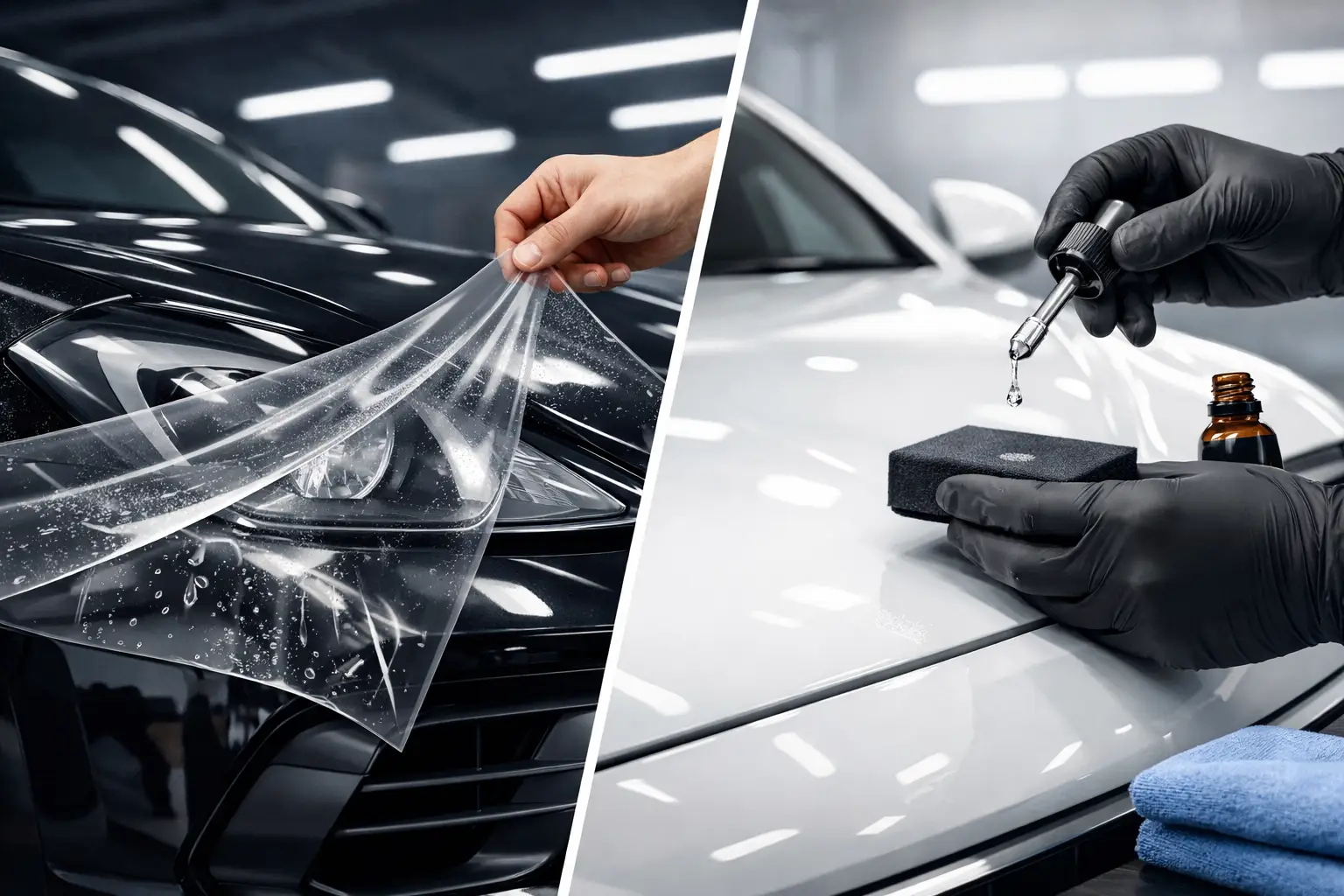
A new vehicle can pick up its first paint chip on I-96, a parking-lot scuff at the grocery store, or water spotting after one neglected wash. That is why PPF vs ceramic coating is not simply a question of which product looks better. It is about matching the right level of protection to how, where, and how often you drive.
Both services improve the ownership experience. Both can preserve a cleaner, glossier finish. But they solve different problems, have different costs, and deliver very different results against real-world damage.
PPF vs Ceramic Coating: The Core Difference
Paint protection film, often called PPF or clear bra, is a clear urethane film installed over painted surfaces. It creates a physical barrier between your paint and impact damage from road debris, gravel, salt, sand, bug splatter, and minor abrasions. Quality film is thick enough to absorb or deflect damage that would otherwise mark the clear coat.
Ceramic coating is a liquid protective coating that chemically bonds with the vehicle's clear coat or, in some cases, with PPF. Once cured, it creates a slick, hydrophobic surface that enhances gloss and makes dirt, water, bugs, and contaminants easier to remove. It does not add a meaningful layer of impact protection.
Put simply: PPF is built to help prevent chips and scratches. Ceramic coating is built to improve gloss, reduce maintenance, and protect against environmental contamination and UV exposure.
That distinction matters on Metro Detroit roads. If your vehicle spends time on highways, follows construction traffic, or sees winter driving, the front end faces risks that a ceramic coating alone cannot stop.
What Paint Protection Film Does Best
PPF is the stronger option when physical damage is your main concern. A properly installed film can protect high-impact areas such as the front bumper, hood, fenders, mirrors, rocker panels, door edges, and rear wheel arches. Full-vehicle coverage is also available for owners who want the highest level of paint preservation.
The film is especially valuable for new vehicles, performance cars, luxury vehicles, and vehicles with soft or difficult-to-match paint. It also makes sense for leased vehicles where avoiding excess wear can help at turn-in, as well as for owners who plan to resell and want the paint to remain in excellent condition.
Many premium PPF products include self-healing top coats. With heat from the sun or warm water, light surface swirls and fine scratches can become less visible or disappear. This feature helps the film maintain a clean appearance, though it is not a cure for deep gouges, major impacts, or neglected maintenance.
PPF has trade-offs. It costs more than ceramic coating because the material and installation process are more involved. The quality of installation also matters a great deal. Proper surface preparation, precise pattern alignment, clean edges, and careful finishing determine whether the film looks nearly invisible or becomes a distraction.
What Ceramic Coating Does Best
Ceramic coating is an excellent choice for owners who want a deep, polished look and less frustration during routine washing. The coating increases surface slickness, causing water to bead and sheet away more easily. Dirt, road grime, and bug residue generally release with less effort when the vehicle is maintained correctly.
The visual improvement can be substantial, particularly after paint correction. A coating can add depth and clarity to darker colors while helping lighter colors look cleaner and brighter. It also provides valuable resistance to UV exposure, oxidation, chemical stains, bird droppings, tree sap, and road film.
However, ceramic coating is often misunderstood. It does not make paint invincible, and it is not a substitute for PPF in high-impact zones. It will not stop a stone from chipping the bumper, prevent a door ding, or protect against a hard scrape. Claims that a coating is completely scratch-proof are not realistic.
Ceramic coating is usually the more budget-conscious way to protect an entire vehicle and improve its appearance. It is a strong fit for daily drivers, vehicles with lower exposure to highway debris, and owners who prioritize easier cleaning and long-term gloss over chip resistance.
Which Option Is Right for Your Driving Habits?
The best choice depends on the risks your vehicle actually faces. A commuter who travels expressways every day has different protection needs than a weekend vehicle that stays in the garage most of the week.
Choose PPF when your priority is defending the paint from physical damage. It is particularly effective on vehicles that see frequent highway mileage, winter road grit, construction zones, spirited driving, or close-following traffic. Even partial coverage can make a practical difference, since the front bumper and leading edge of the hood often take the most abuse.
Choose ceramic coating when you want the whole vehicle to stay glossier and easier to clean. It is a smart option when the paint is already in good condition or after paint correction has removed swirls, haze, and light imperfections. Owners who wash their cars regularly will notice the benefits most, because a coating makes proper maintenance faster and more satisfying.
For many vehicles, the best answer is not one or the other. It is both.
The Best Protection Package: PPF With Ceramic Coating
Applying PPF to the most vulnerable painted panels and ceramic coating over the vehicle provides layered protection. The film handles the impact risk, while the coating improves water behavior, gloss, and cleanup across the paint and film.
A common approach is to protect the front bumper, partial or full hood, front fenders, mirrors, and rocker panels with PPF. Ceramic coating can then be applied to the remaining painted surfaces, wheels, trim, glass, and the film itself. This approach gives drivers strong protection where it counts without requiring full-vehicle PPF.
Full-front PPF paired with a ceramic coating is often a practical choice for new cars in Livonia and across Metro Detroit. It helps protect the areas most exposed to road debris while making the entire vehicle easier to maintain through changing weather and road conditions.
A full PPF installation makes sense for higher-value vehicles, collector vehicles, exotic finishes, or owners who want to preserve every painted panel. While it is the larger initial investment, it can be worthwhile when repainting, paint matching, or diminished resale appeal would be costly.
Preparation Matters More Than Most Owners Expect
Neither service should be treated like a quick add-on. Paint needs to be thoroughly cleaned and decontaminated before installation. Depending on the condition of the vehicle, paint correction may also be needed to remove swirls, scratches, and defects before ceramic coating is applied.
This is especially important because ceramic coating locks in the visual condition of the paint beneath it. If the surface has visible defects, coating over them will not hide them. In some lighting, added gloss can make them more noticeable.
PPF preparation is just as critical. Contamination, poor panel cleaning, or rushed installation can affect adhesion and appearance. Experienced installation protects the vehicle while maintaining clean lines and a refined finish.
At MYNT Customs, protection recommendations should start with the vehicle's condition, mileage, parking situation, and driving routine instead of a one-size-fits-all package. A garage-kept weekend car and a daily-driven SUV need different solutions.
Maintaining PPF and Ceramic Coating
Both PPF and ceramic coating reduce maintenance, but neither eliminates it. Regular washing is still necessary to remove traffic film, salt, mineral deposits, and organic contaminants before they can bond to the surface.
Use quality wash products, clean microfiber towels, and proper hand-washing techniques. Avoid abrasive brushes and automatic car washes that use harsh chemicals or worn equipment. These can dull the finish, create swirls, and shorten the visual life of protective surfaces.
After PPF installation, allow the film to cure according to the installer's recommendations before washing or applying additional products. With ceramic coating, avoid using heavy waxes or products that leave residue and interfere with the coating's hydrophobic behavior. Periodic professional inspections and maintenance can help keep both systems performing as intended.
The right protection should make you more confident about driving your vehicle, not more anxious about using it. Whether that means targeted PPF, a ceramic coating, or a layered package, choose the option that protects the way you actually live with your car.