How to Protect Car Paint From Salt This Winter
A Metro Detroit winter can make a clean vehicle look neglected in a single commute. Road salt clings to rocker panels, wheel arches, bumpers, and door jambs, where moisture keeps it active long after the roads look dry. Knowing how to protect car paint from salt is less about one miracle product and more about building the right defense before winter and maintaining it consistently until spring.
Salt damage is not always obvious at first. The paint may still look glossy while contamination works into seams, chips, trim edges, and exposed metal underneath. The goal is simple: give contaminants less to stick to, remove them before they sit too long, and correct vulnerable areas before corrosion gets a foothold.
Why road salt is hard on vehicle paint
Road salt lowers the freezing point of water, which makes winter roads safer. For your vehicle, however, it creates a wet, conductive film that accelerates corrosion. Salt residue holds moisture against painted panels and finds its way into areas a quick wash can miss, including behind wheels, beneath rocker panels, and inside the lower edges of doors.
Modern automotive paint is durable, but it is not invincible. Small stone chips, scratches, worn clear coat, and unprotected panel edges give saltwater a path to the metal below. Once corrosion starts beneath a paint edge, repairing it is far more involved than routine detailing.
The risk is especially high for vehicles that spend time on highways, sit outdoors, or make short trips where slush does not have time to dry. A garage helps, but bringing a salt-covered vehicle into a warm garage can also keep that salty moisture wet longer. Protection and proper washing still matter.
Start with a clean, corrected surface
The best time to prepare for winter is before the first major salting event. A thorough detail removes bonded contamination, old traffic film, and residues that can prevent a protectant from adhering properly. It also gives you a clear view of paint chips, deep scratches, and damaged areas that need attention.
For newer vehicles, this may be as simple as a careful decontamination and paint inspection. On vehicles with swirl marks, oxidation, or dull paint, professional paint correction can improve clarity and smoothness before protection is applied. A smoother surface is easier to wash and gives coatings, sealants, and film a better foundation.
Do not ignore small chips on the hood, front bumper, and lower doors. Touching them up will not make every defect disappear, but sealing exposed areas is a practical step toward stopping moisture from reaching bare metal. If a chip is already showing rust, it needs to be properly addressed rather than covered over.
Choose protection that matches how you drive
There is no single answer for every vehicle. The right level of protection depends on your budget, how long you plan to keep the car, where it is parked, and how often it sees salted roads.
Ceramic coating for easier winter maintenance
A professional ceramic coating creates a durable, chemically resistant layer over the clear coat. It does not make paint immune to rock chips or eliminate the need to wash the vehicle, but it makes a meaningful difference during winter. Salt, grime, and slush are less likely to bond aggressively to a coated surface, and routine washes become more effective.
For daily drivers, ceramic coating is often the strongest balance of appearance, maintenance, and long-term value. It helps preserve gloss, improves water behavior, and reduces the friction involved in cleaning winter film from painted surfaces. The key is proper preparation and professional application. A coating applied over contamination or neglected paint cannot deliver its full benefit.
Paint protection film for high-impact areas
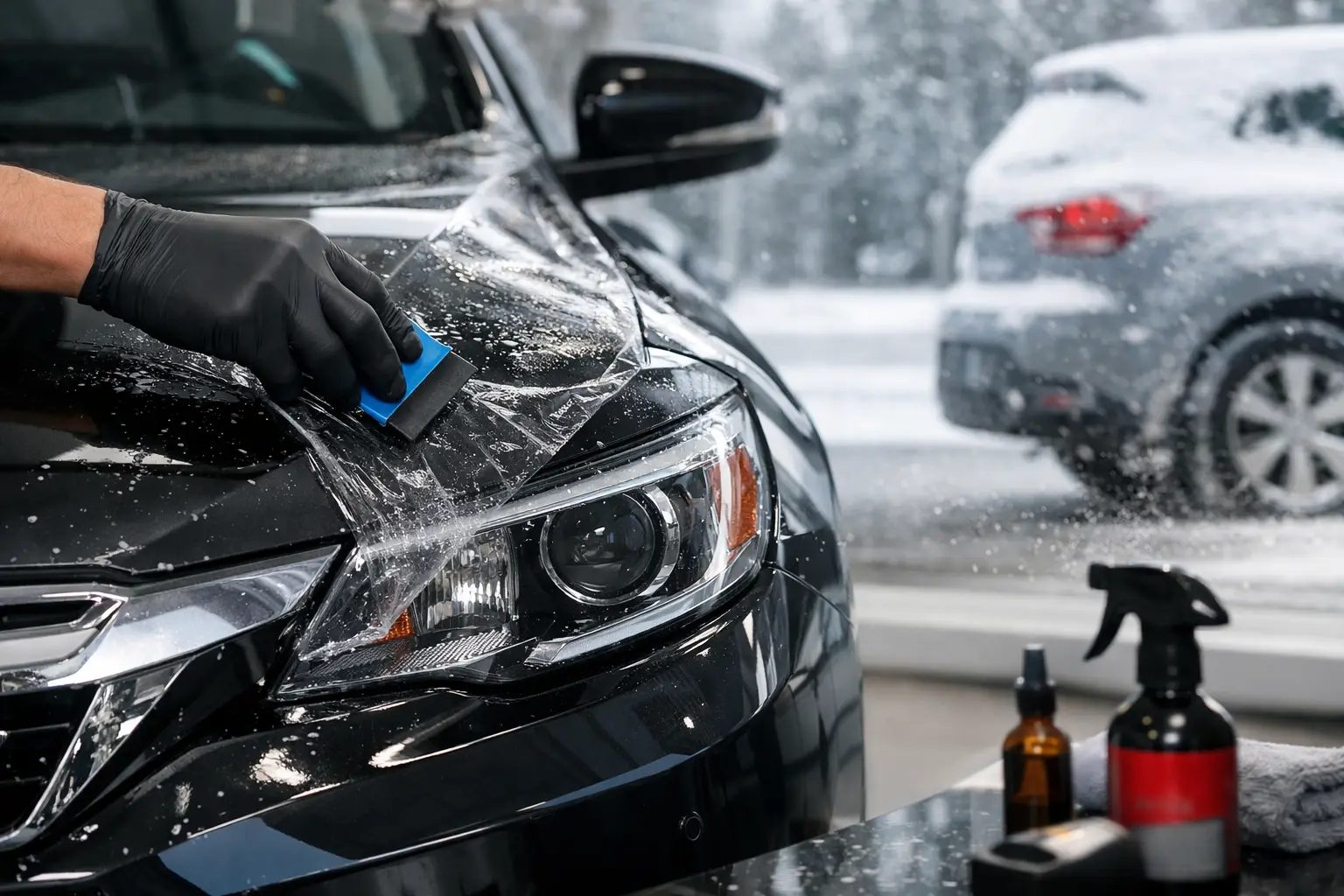
Paint protection film, or PPF, is the better choice where salt comes with road debris. It is a clear, self-healing urethane film designed to absorb impacts from gravel, sand, and small stones that can chip paint. Front bumpers, hoods, mirrors, rocker panels, and lower doors are common coverage areas for winter-driven vehicles.
PPF costs more than a coating, but it provides physical protection that a coating cannot. For a luxury vehicle, performance car, new purchase, or lease you want to return in excellent condition, protecting high-impact panels can be a smart investment. Many owners combine PPF on vulnerable areas with ceramic coating across the rest of the vehicle.
Sealants and waxes for seasonal coverage
A quality paint sealant or wax is a practical option when a coating or film is not the right fit. It will not last as long as professional ceramic protection, especially through repeated winter washes, but it adds slickness and a temporary barrier against contamination. The trade-off is maintenance: expect to reapply it more often and avoid assuming one application will last all season.
How to protect car paint from salt between washes
Protection only works as well as the maintenance behind it. During winter, wash based on road conditions rather than a fixed calendar. If roads have been heavily treated and the vehicle is visibly coated in white residue or slush, it is time to wash - even if it has only been a few days.
A touchless wash is better than letting salt sit, but it should not be your only approach all winter. Look for a wash that includes a thorough underbody rinse, or schedule professional maintenance washes when conditions allow. The undercarriage, wheel wells, suspension components, and rocker panels receive the heaviest exposure and are often the most overlooked.
When washing at home, use pH-balanced products and a proper rinse-first process. Dragging gritty salt residue across dry paint can create scratches. Start with a generous rinse, clean wheels and lower panels carefully, then wash from the top down with clean microfiber towels or mitts. Finish by drying the vehicle, including door jambs and trunk seams, so moisture does not remain trapped.
Avoid using hot water on extremely cold panels. The rapid temperature change is unnecessary and can be hard on glass, trim, and already stressed materials. Mild temperatures and safe washing conditions are better than forcing a wash in severe cold.
Pay attention to the areas salt reaches first
Salt protection is not only about glossy hood and door panels. The lower third of the vehicle does the hardest work in winter. Make it a habit to inspect behind the wheels, along rocker panels, around mud flaps, and at the bottom of doors. These areas collect packed snow and grit that can remain hidden for weeks.
Door jambs, fuel doors, trunk channels, and hatch seams also deserve attention. Wipe them clean after a wash, particularly when you see heavy salt buildup. If you drive a truck or SUV, check the rear bumper, tailgate seams, and step areas where slush accumulates.
Winter wheels need protection as well. Brake dust, salt, and road film can permanently stain neglected wheel finishes. A dedicated wheel coating or sealant can reduce buildup and make cleaning safer, while regular rinsing prevents corrosive residue from baking onto the surface when temperatures rise.
Avoid the habits that quietly damage paint
The most common mistake is waiting for warm weather to clean the vehicle thoroughly. By spring, months of salt exposure may have already dulled trim, stained wheels, and worsened paint chips. Frequent, careful washing is not overkill in Michigan - it is preventive maintenance.
Another mistake is relying on a dirty brush wash. Stiff brushes and contaminated tunnel equipment can grind grit into clear coat, leaving fine scratches that become more visible once the vehicle is clean. A reputable touchless wash is useful for emergency rinses, but hand washing or professional detailing offers better control when the paint matters.
Finally, do not use tire shine, dressings, or spray protectants as a substitute for paint protection. They can improve appearance temporarily, but they do not replace a properly prepared coating, film, or sealant system.
A vehicle that sees winter roads does not have to look worn by spring. Prepare the paint before salt season, rinse contamination away regularly, and use protection that suits the way you drive. For owners who want a higher level of defense, MYNT Customs can help build a paint protection plan that keeps daily-driven vehicles cleaner, glossier, and easier to maintain through the toughest part of the year.