A Paint Correction Transformation Example
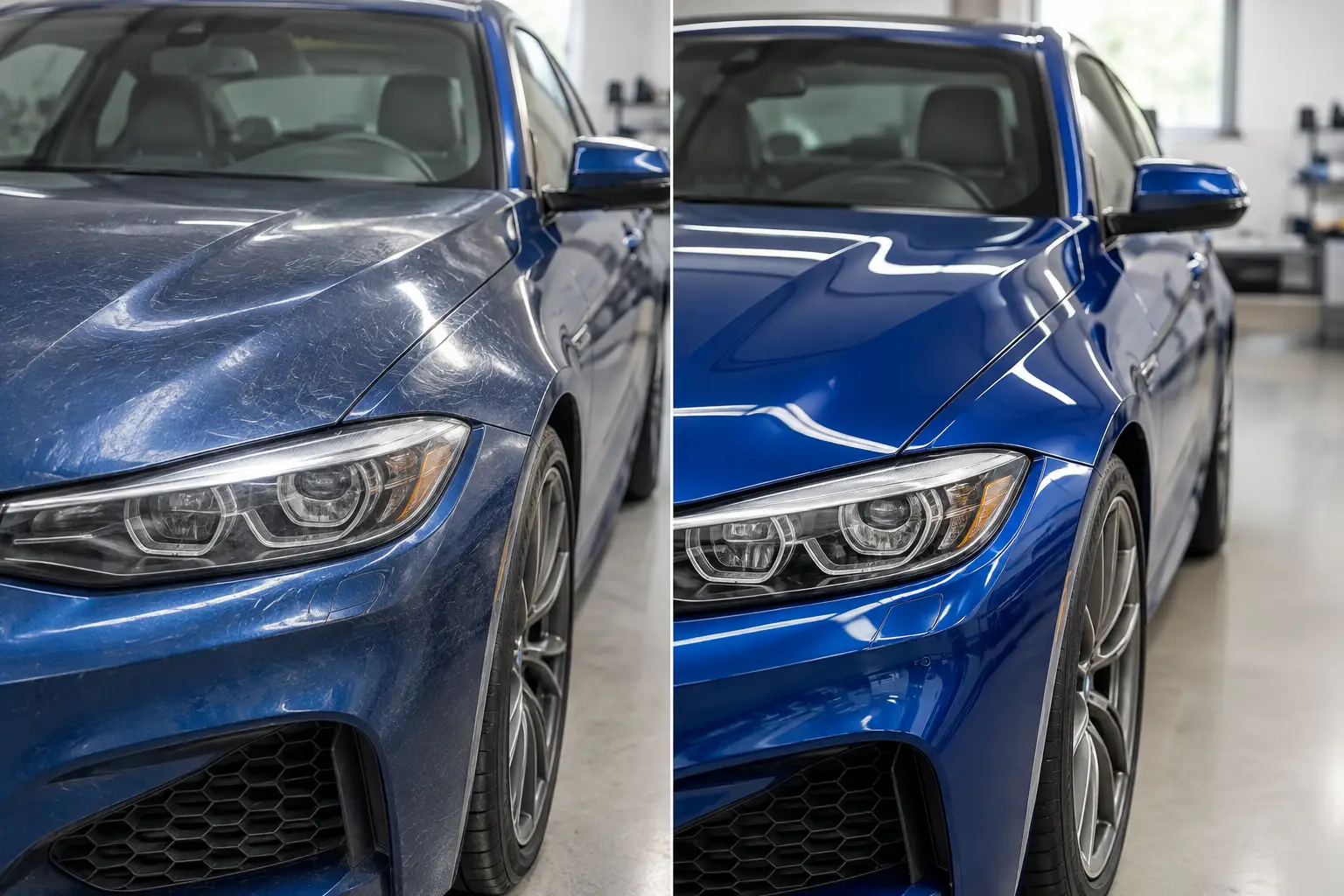
A true paint correction transformation example is not about making a vehicle look artificially shiny for a day. It is about removing or reducing the defects that interrupt the way light reflects off the paint: wash marring, circular swirls, oxidation, haze, water spots, and light scratches. When those defects are corrected properly, the color looks deeper, the gloss becomes sharper, and the vehicle looks cared for from every angle.
For Metro Detroit drivers, that difference can be dramatic. Winter grime, automatic car washes, road film, tree sap, and daily parking all leave their mark. A paint correction service restores clarity to the finish, then gives the vehicle a much stronger foundation for ceramic coating, paint protection film, or routine detailing.
What a Paint Correction Transformation Really Looks Like
Picture a black SUV that has spent several years as a daily driver. From a few feet away, it may look clean after a wash. Under direct sunlight or professional inspection lighting, though, the paint tells a different story. Fine circular scratches cover the hood and doors. The rear hatch is hazy around the handle. The lower panels carry stubborn water-spot etching, while the paint lacks the crisp reflection it had when new.
After a proper correction, the same panels can look completely different. The color appears darker and more saturated. Reflections of lights, windows, and body lines become defined rather than blurred. Metallic flake becomes more visible on lighter colors, while black, gray, and dark blue paint gain a rich, glass-like appearance.
The most noticeable transformation is often not one single scratch disappearing. It is the overall clarity of the paint. When thousands of small defects are reduced, the finish stops looking tired and starts looking intentional.
Before Correction: Gloss Is Hiding Defects
Many vehicles arrive with wax, spray detailer, or dealership-applied products that create temporary slickness. That can make paint appear glossy at first glance, but it does not remove the damage underneath. In some cases, fillers temporarily mask swirls until the next few washes.
Professional paint correction addresses the clear coat itself through controlled machine polishing. The goal is to level the surface as safely as possible, reducing the edges of scratches and defects so light can reflect evenly again. This is why a real transformation holds up better than a quick cosmetic shine.
After Correction: Cleaner Reflections and Stronger Color
Corrected paint does not need heavy products to look impressive. The surface itself reflects more clearly because the defects have been reduced. On a white vehicle, this often means a brighter, cleaner finish. On red paint, the color can look more vibrant. On dark vehicles, correction reveals the depth owners often thought was gone for good.
Results vary by vehicle condition, paint hardness, previous repairs, and the level of correction selected. The best service is not always the most aggressive one. It is the one that delivers a meaningful visual improvement while preserving as much healthy clear coat as possible.
How the Correction Process Creates the Change
A paint correction transformation is built through preparation, inspection, polishing, and protection. Skipping any of those stages can limit the final result.
The process begins with a thorough exterior wash and decontamination. Embedded brake dust, industrial fallout, tar, and bonded contaminants must be removed before polishing. If they remain on the surface, they can interfere with the polishing process or create additional marring.
Next comes paint inspection. A professional detailer evaluates the finish under focused lighting and checks paint thickness where appropriate. This identifies the type and severity of defects, along with areas that may have been repainted or repaired in the past. A thin or previously polished panel requires a different approach than a healthy factory-painted panel.
Polishing is then tailored to the paint. Some finishes respond well to a one-step enhancement polish that removes light defects and adds significant gloss. Others require a multi-step correction using a cutting compound followed by a refining polish. The first stage targets more visible swirls and scratches; the finishing stage refines the paint for clarity and gloss.
At MYNT Customs, the objective is not to chase perfection at the expense of paint health. It is to provide a refined finish that looks exceptional and can be maintained with confidence.
What Paint Correction Can and Cannot Fix
Paint correction is highly effective, but clear expectations matter. It can greatly improve defects that sit within the clear coat, including wash-induced swirls, light scratches, oxidation, haze, buffer trails, and some light water spots.
It cannot safely erase every mark. A scratch that catches a fingernail may be too deep to remove fully without taking unnecessary clear coat with it. Rock chips, peeling clear coat, deep gouges, cracked paint, and corrosion require touch-up, bodywork, or repainting rather than polishing alone.
This is where honest recommendations make a difference. Sometimes reducing a deep scratch by 70 to 90 percent is the smarter choice than attempting total removal. The panel can look dramatically better while retaining more of its original finish for the long term.
Why Protection Should Follow Correction
Once the paint has been corrected, it is at its visual best. Leaving it unprotected means exposing that refined surface to the same UV exposure, road film, bird droppings, salt, and wash marring that created the original defects.
A ceramic coating is a strong option for owners who want enhanced gloss, easier cleaning, hydrophobic behavior, and durable chemical resistance. It does not make the paint invincible, but it helps contaminants release more easily and supports safer maintenance.
Paint protection film is better suited for high-impact areas where rock chips and road debris are the main concern. Many owners choose PPF for the front bumper, hood, fenders, mirrors, and rocker panels, then apply ceramic coating over the remaining corrected paint. The right combination depends on how the vehicle is driven, stored, and maintained.
For a leased vehicle or daily commuter, a one-step correction with a quality protectant may provide the right balance of appearance and cost. For a new performance car or luxury vehicle, a more extensive correction followed by ceramic coating and strategic PPF can make greater sense.
Keeping the Transformation Looking Its Best
The way a vehicle is washed after correction matters as much as the correction itself. Automatic brush washes can quickly reintroduce the same swirls that were removed. Even a quality coating cannot prevent abrasive brushes from marking the surface.
Use a touchless wash when a hand wash is not available, or choose a careful hand-wash method with clean towels, proper wash media, and pH-balanced products. Dry the vehicle with high-quality microfiber towels rather than letting mineral-heavy water dry on the paint. Promptly remove bird droppings, bug residue, and tree sap, especially during warm weather.
Regular maintenance detailing also helps preserve the finish. It gives a professional the opportunity to remove contamination safely, inspect the protection, and address small issues before they become more visible.
Is Paint Correction Worth It?
For owners preparing a vehicle for sale, paint correction can improve first impressions and help the vehicle present at a higher level. For enthusiasts, it creates the finish that makes a weekend drive, car show, or garage reveal more rewarding. For daily drivers, it restores pride in a vehicle that may otherwise feel worn despite being mechanically sound.
The value is not limited to photographs under shop lights. It is in walking up to your vehicle after work, seeing clean reflections across the hood, and knowing the finish has been treated with the right level of care. When paint has lost its clarity, correction is often the point where routine maintenance becomes a visible reset.