Paint Correction Service Guide for Better Paint
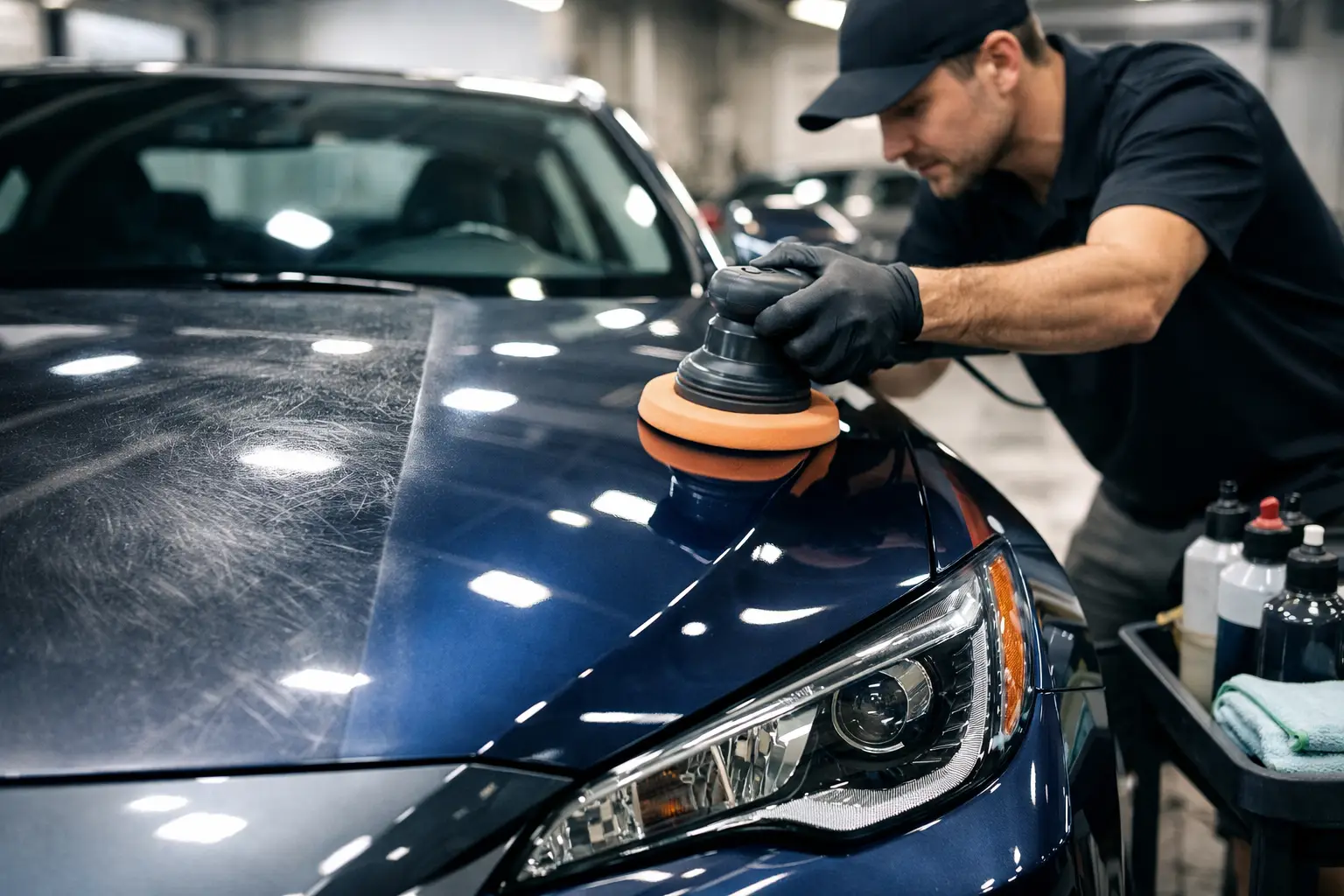
A vehicle can be freshly washed and still look tired under direct sunlight. Fine swirl marks, water spots, random scratches, and dull paint become especially noticeable on dark colors, but every finish can lose clarity over time. This paint correction service guide explains what professional correction does, what it cannot do, and how to choose the right level of service for your vehicle.
What Paint Correction Actually Does
Paint correction is a machine-polishing process that improves the appearance of automotive paint by reducing defects in the clear coat. Most modern vehicles have a colored base coat protected by a clear outer layer. Swirls, wash-induced marring, light scratches, oxidation, and hazy reflections often live within that clear coat.
A trained technician uses paint-safe polishing machines, pads, compounds, and finishing polishes to level the surface carefully. The goal is not simply to make the vehicle shiny. It is to create cleaner reflections, stronger gloss, better color depth, and a more refined finish without removing more clear coat than necessary.
This is why paint correction is different from a standard detail. A thorough detail cleans, decontaminates, and refreshes a vehicle. Correction focuses on the condition of the paint itself. It takes more time, more inspection, and a more measured approach.
The Paint Defects Correction Can Improve
Most customers notice paint correction after seeing the vehicle under sun, parking lot lights, or garage lighting. Those conditions reveal flaws that are easy to miss in shade.
Correction can significantly improve light-to-moderate swirl marks, towel marring, holograms from poor polishing, light scratches, water-spot etching, oxidation, and general loss of gloss. It can also improve the appearance of isolated defects such as scuffs around door handles or scratches near the trunk opening, depending on their depth.
The key word is improve. Some imperfections are too deep to safely remove completely. If a scratch catches a fingernail, extends through the clear coat, or exposes primer or metal, polishing will not make it disappear. It may be softened visually, but it generally requires touch-up or body repair for a true repair.
Paint correction also cannot reverse peeling clear coat, severe rock-chip damage, dented panels, or faded paint where the clear layer has failed. A reputable shop should be clear about these limitations before work begins.
Why a Vehicle Needs More Than One Correction Level
There is no single paint correction package that fits every vehicle. The proper level depends on the paint's condition, color, age, paint thickness, previous repair history, and the owner's expectations.
One-Step Correction
A one-step correction uses a polish that delivers meaningful defect removal while enhancing gloss in one primary polishing stage. It is often a practical choice for newer daily drivers with mild swirls, leased vehicles being prepared for turn-in, or owners who want a major visual improvement without pursuing near-perfect results.
This option usually removes a portion of visible defects rather than every mark. The exact result depends on the paint. Softer clear coats may correct quickly, while harder finishes may need more aggressive methods to achieve the same improvement.
Multi-Step Correction
A multi-step correction typically begins with a more aggressive compounding stage to address heavier defects, followed by a finishing polish to refine the paint. This process is better suited to heavily swirled vehicles, darker paint, enthusiast-owned cars, and vehicles being prepared for ceramic coating.
The result can be dramatic, particularly when the paint has been dulled by years of automatic car washes or improper washing. However, greater correction requires more labor and more careful paint management. More aggressive is not always better. Preserving the long-term health of the clear coat matters as much as achieving a short-term visual result.
What Happens During a Professional Paint Correction Service
A proper service starts with inspection, not polishing. The vehicle is evaluated under dedicated lighting to identify swirls, scratches, staining, and previous bodywork. Technicians also look for areas that may need special care, including thin edges, repainted panels, trim, and delicate finishes.
The vehicle is then washed and chemically decontaminated to remove embedded fallout, road film, tar, and other contamination. Mechanical decontamination may follow when needed. Polishing contaminated paint can create additional marring and reduce the effectiveness of the correction process.
Before committing to a method, a technician performs a test spot. This small section establishes the safest combination of pad, product, machine speed, and technique for that specific paint. It also gives a realistic preview of what can be achieved.
Once the correction is complete, polishing residue is removed and the finish is inspected again under controlled lighting. At MYNT Customs, the focus is on a refined result that looks right in real conditions, not just under a shop light for a quick photo.
Is Paint Correction Worth It Before Ceramic Coating?
For many owners, yes. Ceramic coating protects the condition that exists beneath it. It can add gloss, improve water behavior, and make routine cleaning easier, but it does not erase swirls or scratches. Applying a coating over neglected paint can lock in the appearance of those defects.
Correcting the paint first creates a clearer foundation for the coating. The added gloss and reflection are more noticeable, and the vehicle starts its protection period in better condition. This is especially valuable for new vehicle owners who want to preserve a fresh finish before routine driving, winter weather, and repeated washing take their toll.
That said, not every vehicle needs a full multi-step correction before coating. A well-maintained daily driver may benefit from a one-step polish and quality protection. A vehicle with substantial paint defects or a show-focused owner may choose a more extensive correction. The right recommendation should match how the vehicle is used and maintained.
Factors That Affect Paint Correction Pricing
Paint correction pricing is based on labor, paint condition, vehicle size, and the desired result. A compact car with light marring may require far less time than a large SUV with years of automatic-wash damage.
Color also affects the process. Black, dark blue, and deep red finishes tend to reveal defects more easily, which can require extra refinement. Harder clear coats may demand more cutting time, while softer paint may require gentler products and careful finishing to avoid creating fresh haze.
Previous repainting is another consideration. Repaired panels can behave differently from factory paint, and paint thickness may vary across the vehicle. A professional inspection helps determine the appropriate plan before promising a correction percentage or final result.
Be cautious when comparing services by price alone. A quick polish may add temporary shine, but it is not automatically paint correction. Quality correction involves preparation, testing, controlled technique, inspection, and protection after the polishing work is complete.
How to Keep Corrected Paint Looking Better
Paint correction improves the finish, but maintenance determines how long that improvement remains visible. The biggest enemy is improper washing. Dirty brushes, tunnel car washes, old towels, and aggressive wiping can quickly reintroduce the very swirl marks correction removed.
Use a touchless pre-rinse when possible, high-quality wash media, clean microfiber drying towels, and lubricated drying aids. Avoid wiping dust or pollen from dry paint. When a vehicle is heavily soiled, especially after Metro Detroit winter driving, let safe washing do the work instead of rubbing grit across the finish.
Protection also matters. Ceramic coating, paint protection film, and high-quality sealants each serve different purposes. A ceramic coating supports easier cleaning and chemical resistance. Paint protection film is the stronger choice for defending high-impact areas from rock chips and road debris. Neither option makes a vehicle maintenance-free, but both can help preserve the corrected finish when properly selected and cared for.
When to Schedule Paint Correction
The best time is before applying long-term protection, selling a vehicle, returning a lease, or after buying a pre-owned vehicle with visible wash damage. It is also a smart service for owners who are tired of seeing their paint look cloudy despite regular washing.
Do not wait for defects to become severe before addressing them. Light marring is often easier to improve than years of neglected damage, and a thoughtful maintenance plan can reduce the need for aggressive correction later. A clear, glossy finish starts with honest inspection, careful correction, and habits that protect the work long after the vehicle leaves the shop.