Car Detailing Versus Car Wash: Which Pays Off?
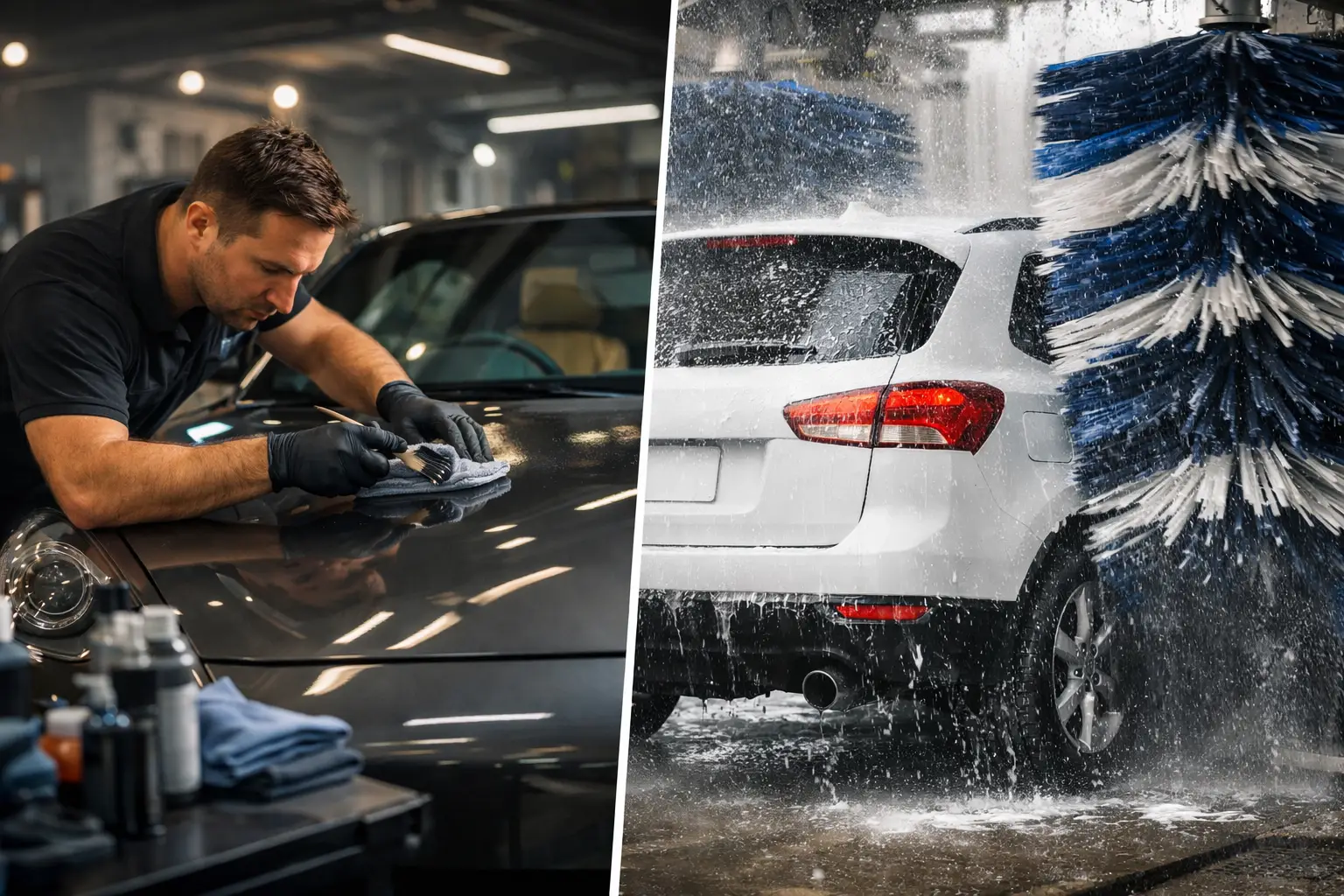
A quick wash can make a vehicle look presentable before work, a weekend drive, or a night out. But when salt haze is stuck behind the wheels, the interior has collected months of dust, or the paint has lost its clarity, a wash reaches its limit. Car detailing versus car wash is not simply a question of how clean you want your vehicle to look. It is a decision about cleaning depth, preservation, time, and long-term value.
For Metro Detroit drivers, that distinction matters. Road salt, slush, construction dust, pollen, UV exposure, and daily commuting all leave their mark. The right service depends on your vehicle’s condition and what you expect from it after the appointment.
Car Detailing Versus Car Wash: The Core Difference
A car wash is designed for routine exterior maintenance. Its primary job is to remove loose dirt, road film, and surface contaminants so the vehicle looks cleaner and is easier to maintain. Depending on the wash, it may include wheel cleaning, a basic spray wax, tire shine, and a quick interior vacuum.
Professional detailing is a more deliberate reconditioning service. It addresses the areas a standard wash commonly misses or treats only briefly: embedded contamination in paint, brake dust on wheels, buildup in seams and door jambs, stains and odors inside the cabin, cloudy trim, and neglected surfaces throughout the vehicle. The work is performed with more time, specialized products, tools, and inspection.
The result is not just a cleaner vehicle. A well-executed detail can restore a sharper, more cared-for appearance while helping protect surfaces from premature wear.
What a Car Wash Does Well
A car wash has a clear place in a smart maintenance routine. When used consistently, it removes grime before it has extended time to sit on the paint, wheels, and glass. This is especially useful after winter driving, long highway trips, or a stretch of rainy weather.
For a daily driver that is already in good condition, a quality wash is often the practical choice between larger services. It is faster, less expensive, and helps maintain the appearance of prior work such as detailing, paint correction, ceramic coating, or paint protection film.
However, a wash is usually not intended to correct defects or deeply clean every surface. Tunnel washes and high-volume hand washes also vary widely in technique. Brushes, contaminated towels, or improper drying can create light scratches and swirl marks over time. A touchless wash avoids direct brush contact, but may not remove heavier road film as effectively.
That does not mean every automatic wash is harmful or every hand wash is flawless. It means the method, equipment, and condition of the vehicle matter. If preserving a high-gloss finish is a priority, wash quality deserves as much attention as wash frequency.
What Professional Detailing Adds
Detailing begins with a more complete assessment. Instead of treating every vehicle the same way, the service can be tailored around the paint condition, interior use, mileage, existing protection, and owner goals.
Exterior detailing often includes careful washing, wheel and tire cleaning, decontamination, treatment of door jambs and exterior trim, and thorough drying. Decontamination is a key difference. Even paint that feels clean can hold bonded contaminants such as industrial fallout, brake dust, tree sap residue, and road grime. These particles can dull the finish and interfere with the performance of protective products.
Interior detailing goes far beyond a quick vacuum. It can involve deep cleaning carpets and upholstery, treating leather and trim, cleaning vents and crevices, addressing stains, and restoring a fresh, orderly feel to the cabin. For families, commuters, pet owners, rideshare drivers, and anyone preparing a vehicle for sale or lease return, this level of attention can make a meaningful difference.
Detailing may also include paint correction when the goal is to reduce swirl marks, light scratches, oxidation, or haze. Paint correction is not a wash and should not be presented as one. It is a skilled process that refines the clear coat to improve gloss and clarity. The amount of correction that makes sense depends on paint thickness, defect severity, budget, and the vehicle’s intended use.
The Cost Difference Is Really a Scope Difference
A wash costs less because it takes less time and covers less. That is not a drawback when routine maintenance is all you need. Paying for a full detail every time the vehicle gets dusty would not be practical for most owners.
Detailing costs more because it is labor-intensive and outcome-focused. The technician spends more time cleaning, inspecting, reconditioning, and protecting the vehicle. Products, tools, and expertise also affect pricing, particularly when the service includes stain removal, pet hair removal, paint correction, ceramic coating preparation, or other specialized work.
The useful question is not, “Which service is cheaper?” It is, “What condition is my vehicle in, and what result do I need?” A wash is a maintenance expense. Detailing can be a maintenance service, a cosmetic reset, or a preparation step for long-term protection.
When a Car Wash Is the Right Choice
Choose a wash when the vehicle is generally clean, protected, and being maintained regularly. It is the right move after normal road use, light rain, pollen exposure, or a short period between deeper cleanings.
A wash also makes sense when you need basic visibility and safety improvements. Clean glass, mirrors, lights, and wheels matter in all seasons, particularly during Michigan winters when salt and slush can quickly reduce visibility and hide wheel buildup.
If your car has ceramic coating or paint protection film, regular proper washing is essential. These protective services make cleaning easier and help preserve the finish, but they do not eliminate the need to remove dirt and contaminants. Protection performs best when it is maintained correctly.
When Detailing Is Worth It
Detailing is worth considering when your vehicle no longer looks clean even after a wash. If the paint feels rough, the wheels remain stained, the interior has noticeable odors or spills, or the finish looks dull under direct light, a detail can address the causes rather than cover them up.
It is also a strong choice before a special event, sale, trade-in, lease inspection, or seasonal change. A properly detailed vehicle creates a better first impression and can help owners present their vehicle at its best when value matters.
New vehicle owners can benefit as well. Dealership delivery preparation is not always the same as professional paint refinement and protection. A new vehicle may arrive with transport film residue, light wash marring, rail dust, or other contamination. Starting with a clean, corrected, protected surface gives future maintenance a better foundation.
For enthusiasts and luxury vehicle owners, detailing often supports a larger preservation plan. Paint correction can improve the finish before ceramic coating is applied, while paint protection film can help defend high-impact areas from rock chips and road debris. Window tint adds comfort and UV reduction. Each service does a different job, but detailing is often the step that brings the vehicle back to a condition worth protecting.
A Practical Maintenance Plan
Most vehicles do not need an either-or approach. They need both services at the right intervals. Regular washing manages day-to-day exposure. Periodic detailing resets the vehicle and deals with the contamination, wear, and neglected areas that routine washing cannot fully solve.
The ideal schedule depends on where the vehicle is parked, how often it is driven, whether children or pets ride in it, and the level of protection already in place. A garage-kept weekend vehicle with ceramic coating may need a different routine than a daily commuter traveling through Livonia, Detroit, Novi, or Canton year-round.
As a general rule, wash often enough that contaminants do not remain on the vehicle for long periods. Schedule a professional detail when the finish and interior need more than maintenance, or when you want to restore the vehicle before adding protection. If the paint has visible swirls or the vehicle is being coated, ask whether paint correction and decontamination should be included first.
Protect the Finish You Paid For
The best choice comes down to purpose. A car wash keeps a clean vehicle clean. Professional detailing brings a tired, neglected, or imperfect vehicle closer to its best condition and prepares it for better protection going forward.
For owners who want stronger gloss, a cleaner interior, and surfaces that hold up better through Metro Detroit driving, quality care is not about choosing the most expensive service every time. It is about using the right level of service before small issues become harder to correct. MYNT Customs can help assess your vehicle’s condition and recommend a practical path toward a cleaner, better-protected finish.