Can PPF Protect Bumpers From Road Damage?
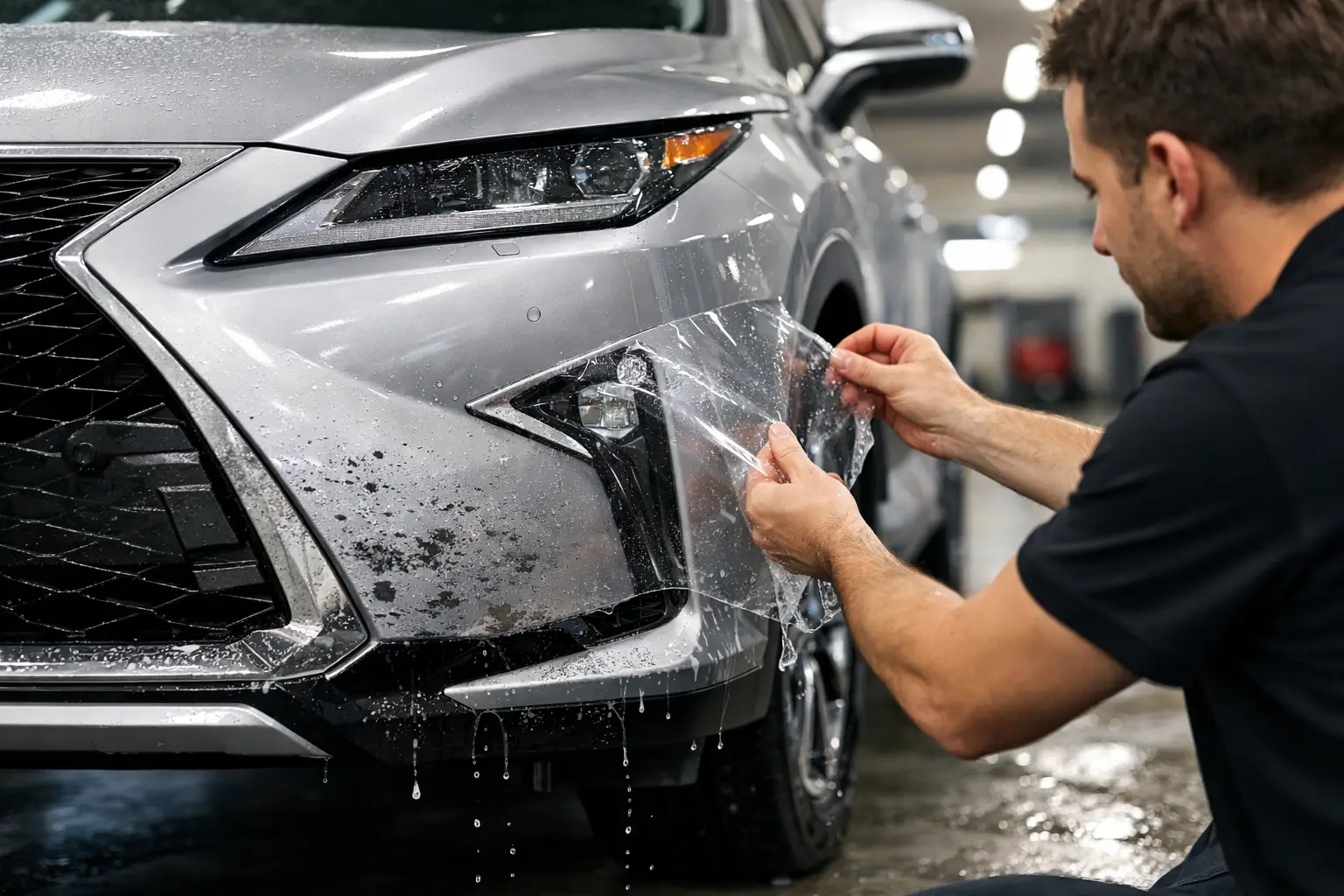
A freshly painted front bumper can collect its first rock chip on the drive home. For Metro Detroit drivers, that risk rises quickly with highway debris, winter grit, construction zones, parking-lot contact, and road salt. So, can PPF protect bumpers? Yes. Properly installed paint protection film is one of the most effective ways to reduce the visible damage bumpers take from daily driving - but it has realistic limits.
PPF is not a force field. It cannot prevent every dent, crack, or hard impact. What it does exceptionally well is absorb and disperse the kind of surface abuse that turns a clean bumper into a collection of chips, scuffs, and dull spots.
Can PPF Protect Bumpers From Chips and Scuffs?
Bumpers are among the most vulnerable painted panels on any vehicle. The front bumper faces gravel thrown by traffic, sand, insects, loose asphalt, and debris at highway speed. Lower corners often catch curb rash or scrape steep driveways. Rear bumpers deal with loading cargo, bike racks, shopping carts, and careless parking.
High-quality paint protection film creates a durable, transparent urethane layer over the painted surface. When small stones or road debris strike the bumper, the film takes the direct hit rather than the clear coat and color underneath. In many situations, that means the film may show a mark while the original paint remains intact.
The benefit is especially noticeable on dark paint, where even a tiny chip exposes a bright spot and becomes difficult to ignore. It also matters on white vehicles, where road grime and small black marks can make the bumper look worn before the rest of the vehicle does.
For normal road debris, light abrasions, and routine scuffs, bumper PPF offers meaningful protection. It is particularly valuable for vehicles that regularly see I-96, I-275, M-14, or other high-traffic Metro Detroit routes where loose material and winter road treatment are part of the ownership experience.
What Bumper PPF Cannot Prevent
A good protection decision starts with clear expectations. PPF can reduce cosmetic damage, but it cannot reverse physics.
A deep collision, a sharp object driven through the surface, or a curb impact hard enough to distort the bumper can still damage the paint and plastic beneath the film. The same is true for existing rock chips. Film can cover minor imperfections, but it will not make damaged paint disappear. Paint correction or touch-up work may be needed before installation for the cleanest result.
PPF also does not eliminate the need to wash the vehicle. Brake dust, road film, bug residue, salt, and tar should still be removed regularly. The film protects the paint, but neglected contamination can affect the film's appearance over time.
Think of it this way: PPF is designed to help a bumper survive everyday use in better condition. It is not a replacement for safe parking, careful loading, or collision repair.
Why Bumpers Need More Protection Than Most Panels
The hood and fenders are common PPF choices, but the bumper is often the panel that benefits most. Its shape places it directly in the path of road debris, and its lower height makes it susceptible to grit kicked up by trucks and SUVs.
Modern bumper designs add another consideration. Many vehicles use painted trim, gloss-black accents, cameras, parking sensors, radar components, and complex body lines in the same area. Repainting a bumper after repeated chipping can be costly, and color matching is not always perfect, especially as a vehicle ages.
Protecting the original finish can help preserve a more consistent appearance. For leased vehicles, it may also help reduce the chance of excessive wear charges tied to obvious cosmetic damage. For owners planning to sell or trade, a clean original bumper supports the overall impression that the vehicle has been cared for properly.
Full Bumper Coverage vs. Partial Coverage
For bumper protection, full coverage is usually the smarter choice. Partial bumper film can leave exposed edges in high-impact areas, and those edges may be more visible on a curved, highly contoured panel.
A full bumper installation allows the film to cover the areas most likely to chip, including the center section, corners, lower valance areas, and painted sections around grilles or lights when appropriate. On many vehicles, a skilled installer can wrap film around edges to create a cleaner, more integrated look.
Partial coverage may make sense when the goal is to protect a specific high-contact area, such as the top of a rear bumper cargo ledge. This narrow strip is useful for SUVs, hatchbacks, and trucks that frequently carry strollers, tools, sports equipment, or luggage. It protects against loading scratches without requiring film across the entire rear bumper.
The right coverage depends on how the vehicle is driven and used. A weekend performance car may need front-end protection from spirited highway driving. A family SUV may benefit from both a full front bumper and a rear cargo protection strip. A daily commuter may prioritize the front bumper because it takes the most consistent road exposure.
The Difference Between Quality Film and a Quality Installation
The material matters, but installation quality determines how well PPF looks and performs on a bumper. Bumpers have sharp curves, recessed sections, vents, sensors, and complex transitions. Rushed work can leave visible seams, poorly aligned edges, trapped contamination, or lifting around tight areas.
Professional installation begins with thorough cleaning and paint preparation. Any embedded grime, wax residue, or contamination left under the film can affect adhesion and appearance. The film is then carefully positioned, stretched within safe limits, and finished around the bumper's contours.
Premium modern PPF is typically self-healing, meaning light surface scratches can fade with heat from sunlight, warm water, or normal engine heat depending on the film and the damage. Many films also offer hydrophobic properties that make the surface easier to clean. Those features improve day-to-day appearance, but they work best when the film is properly maintained.
At MYNT Customs, the goal is not simply to apply film. It is to deliver clean coverage that complements the vehicle's original lines while protecting the areas that see the most wear.
PPF or Ceramic Coating for Bumpers?
Ceramic coating and PPF serve different purposes. A ceramic coating improves gloss, water behavior, and washability. It provides a degree of chemical and UV resistance, but it is too thin to offer meaningful protection against rock chips.
PPF is the better choice when physical impact protection is the priority. A coated bumper may be easier to wash after a drive, but it can still chip when gravel hits it. A PPF-covered bumper has a thicker sacrificial layer designed specifically for that type of contact.
Many owners choose both. PPF goes on high-impact areas such as the bumper, hood, fenders, mirrors, and rocker panels, while ceramic coating is applied over the rest of the exterior for easier maintenance and a uniform finish. That combination is not necessary for every budget, but it offers a practical balance of protection and appearance for vehicles intended to stay clean and valuable over the long term.
How to Keep Bumper PPF Looking Its Best
Once the film has had time to cure, normal washing is encouraged. Regularly removing road salt and bug residue is especially important in Michigan. Use pH-balanced car wash products, clean microfiber towels, and a careful drying method to avoid dragging abrasive dirt across the surface.
Avoid picking at film edges, and do not aim a pressure washer directly at an edge from close range. If an edge begins to lift or a section is damaged by a major impact, have it inspected promptly. One advantage of PPF is that an affected section can often be replaced without repainting the entire bumper, provided the underlying paint is undamaged.
PPF will not make a bumper invincible, but it can make ordinary driving far less punishing for the paint underneath. If your vehicle spends time on Michigan highways, sees winter weather, or simply deserves to stay sharp beyond its first few seasons, protecting the bumper early is usually far easier than repairing it later.