Paint Correction vs Polishing: What You Need
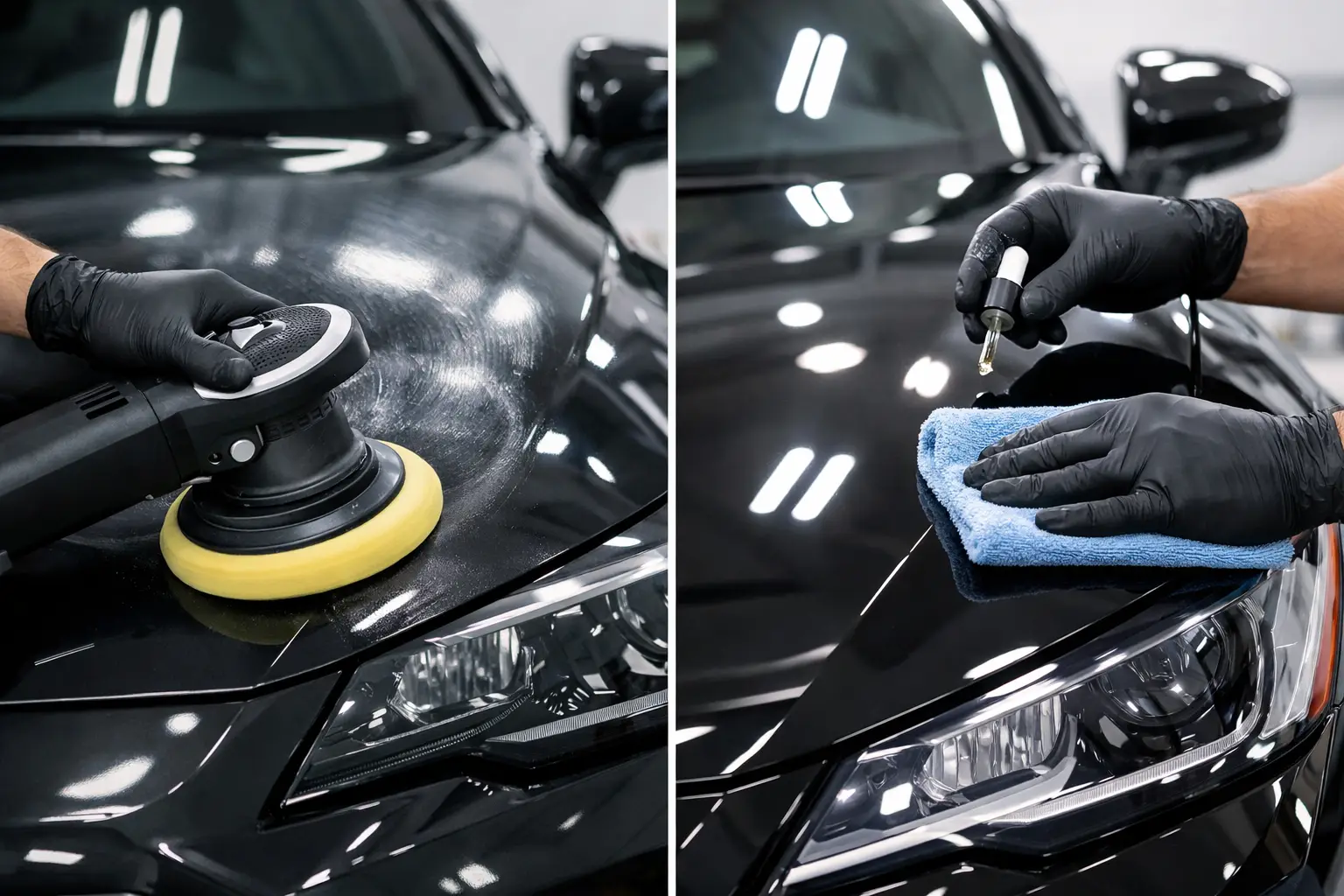
A vehicle can look clean and still look tired. Under direct sunlight, parking-lot lights, or a garage LED, light scratches, swirl marks, water spots, and haze become obvious. That is where paint correction vs polishing becomes more than a wording question. The right service can restore clarity and gloss; the wrong expectation can leave an owner wondering why defects are still visible after a detail.
For Metro Detroit drivers, paint condition takes a real beating. Winter road grime, automatic car washes, salt residue, tree sap, and repeated wiping all leave their mark. Understanding the difference helps you choose work that fits your vehicle’s condition, budget, and long-term protection plan.
Paint Correction vs Polishing: The Real Difference
Polishing is the process of using a machine, pad, and abrasive polish to refine automotive paint. Depending on the product and technique, polishing can add shine, reduce light marring, remove mild oxidation, and improve the paint’s overall appearance. It is a broad term, not a guaranteed level of defect removal.
Paint correction is a more targeted, measured approach to polishing. Its purpose is to reduce or remove visible defects in the clear coat, such as swirl marks, wash scratches, haze, oxidation, and certain etched marks. A correction service may involve one polishing step or several, selected based on the condition and response of the paint.
In simple terms, paint correction uses polishing, but not every polish is paint correction. A quick enhancement polish may make a vehicle look noticeably glossier without eliminating the deeper defects that show up in the sun. Correction is for owners who want a more substantial transformation and understand that meaningful results require more time, inspection, and care.
What Is Actually Being Corrected?
Most modern vehicles have a colored base coat covered by a transparent clear coat. Many visible swirls and fine scratches exist in that clear coat rather than the color layer underneath. They scatter light instead of reflecting it cleanly, which is why paint can appear dull even after a wash.
Correction carefully levels a very small amount of surrounding clear coat to soften the appearance of those defects. The goal is a flatter, clearer surface that reflects light more evenly. Done properly, this is a controlled process, not aggressive sanding or indiscriminate buffing.
That distinction matters because clear coat is not unlimited. A professional should assess the paint before choosing an approach, especially on older vehicles, repainted panels, thin factory paint, or vehicles that have been polished repeatedly. The best result is not always 100 percent defect removal. On some paint, preserving clear coat for the future is the smarter choice.
Deep scratches that catch a fingernail, rock chips, cracked paint, and damage that reaches the color coat cannot be polished away. They may be improved visually, but true repair can require touch-up, wet sanding, or repainting. Honest paint correction sets realistic expectations before the machine ever touches the panel.
When a Polish Is the Better Choice
A polish is often the practical choice for a newer daily driver with light wash marring, mild dullness, or no major defects. It can deliver a strong gloss improvement without the extra time required for more extensive correction. This is especially useful when the owner wants the vehicle cleaned up before a special event, lease turn-in, trade-in, or seasonal protection service.
An enhancement polish also makes sense when perfection is not the goal. A black SUV that spends every week in an automatic wash will likely collect new fine marks over time. Spending heavily to chase every defect may not match how the vehicle is used. A sensible polish, followed by proper protection and better wash habits, can provide a better value.
Polishing is also commonly used to prepare paint for a sealant, wax, or ceramic coating. The cleaner and clearer the surface is before protection is applied, the better the finished appearance will be. Still, the prep level should match the owner’s expectations. A coating will preserve the finish underneath it, including any remaining swirls.
When Paint Correction Is Worth It
Paint correction is a stronger fit when defects are the first thing you notice. This often includes vehicles with severe automatic-car-wash swirling, neglected paint, oxidation, hard-water spotting, holograms from previous buffing, or haziness that hides the true color of the vehicle.
It is particularly worthwhile before applying a ceramic coating or paint protection film. Ceramic coating adds gloss and creates a durable, easier-to-clean protective layer, but it does not erase scratches. In fact, its gloss can make existing defects more noticeable. Correcting the paint first creates the clean, sharp finish owners expect from a premium coating installation.
For paint protection film, the decision depends on the panel and the type of defect. Light defects in exposed areas such as the hood, front bumper, fenders, and mirrors are often addressed before film installation. Deeper chips or damaged paint need to be evaluated individually, because film protects what is there but is not a substitute for body repair.
Correction can also be a smart resale move. A well-cared-for finish signals that the vehicle has been maintained, and a vehicle with clear paint photographs better, shows better, and makes a stronger first impression. The return is not always a dollar-for-dollar increase in sale price, but the visual advantage can help a listing stand apart.
How Professionals Decide the Right Level of Correction
A quality service begins with inspection, not a menu selection. Paint color, age, condition, prior repairs, and the customer’s goals all influence the recommended process. Dark colors, especially black, deep blue, and dark gray, reveal defects more easily than silver or white. They can also require more refinement to achieve a crisp finish.
The vehicle should be thoroughly washed and chemically decontaminated first. Embedded particles, iron fallout, tar, and bonded contamination can interfere with polishing and create additional marring. Once the paint is clean, the detailer can inspect it under proper lighting and, when appropriate, measure paint thickness.
A test spot is one of the most valuable parts of the process. Rather than making assumptions, the technician tries a safe combination of pad, machine, and polish on a small area. That test shows what level of improvement is realistic and what approach delivers it with the least necessary clear-coat removal.
A one-step correction usually targets a meaningful improvement in gloss and a reduction in lighter defects in a single polishing stage. It is efficient and often ideal for daily-driven vehicles. A multi-step correction uses a more aggressive compounding stage for heavier defects, followed by a finishing polish to refine the paint. It can produce a more dramatic result, but it requires additional labor and may not be necessary for every vehicle.
Protection Does Not Replace Maintenance
After polishing or correction, the finish needs protection. Ceramic coating, paint protection film, paint sealants, and quality waxes all serve different purposes. Ceramic coating improves chemical resistance and makes routine cleaning easier. PPF provides the strongest defense against rock chips and road debris on covered panels. Sealants and waxes offer shorter-term protection with lower upfront cost.
None of these options makes paint invincible. Improper washing can still create marring, and contaminants should still be removed promptly. The maintenance routine matters just as much as the correction work: use clean wash media, quality shampoo, proper drying towels, and techniques that minimize friction. Avoid using a dry towel to wipe dusty paint, which is one of the fastest ways to create fresh scratches.
For owners who want the finish to stay sharp through Michigan weather, a professional maintenance plan can protect the investment made during correction. Regular inspections also catch water spots, contamination, and minor issues before they become harder to address.
Choose Results That Match How You Drive
The best choice is not automatically the most intensive one. A lightly marred daily driver may benefit most from a single-step polish and durable protection. A weekend performance car, luxury vehicle, or newly purchased vehicle with visible wash damage may justify a more comprehensive correction before coating. A vehicle with thin paint or deep damage may need a conservative approach that prioritizes paint preservation.
At MYNT Customs, the goal is to recommend the level of refinement that makes sense for the vehicle in front of us, not to sell more correction than the paint needs. A proper inspection turns a vague request for a “buff and shine” into a clear plan for better gloss, better protection, and a finish you will be proud to see every time the sun comes out.
If your paint looks different under sunlight than it does in the driveway, that is the right time to have it evaluated. The right correction or polish can make the vehicle look cared for again while keeping its long-term condition in focus.