PPF Versus Vinyl Wrap for Metro Detroit Drivers
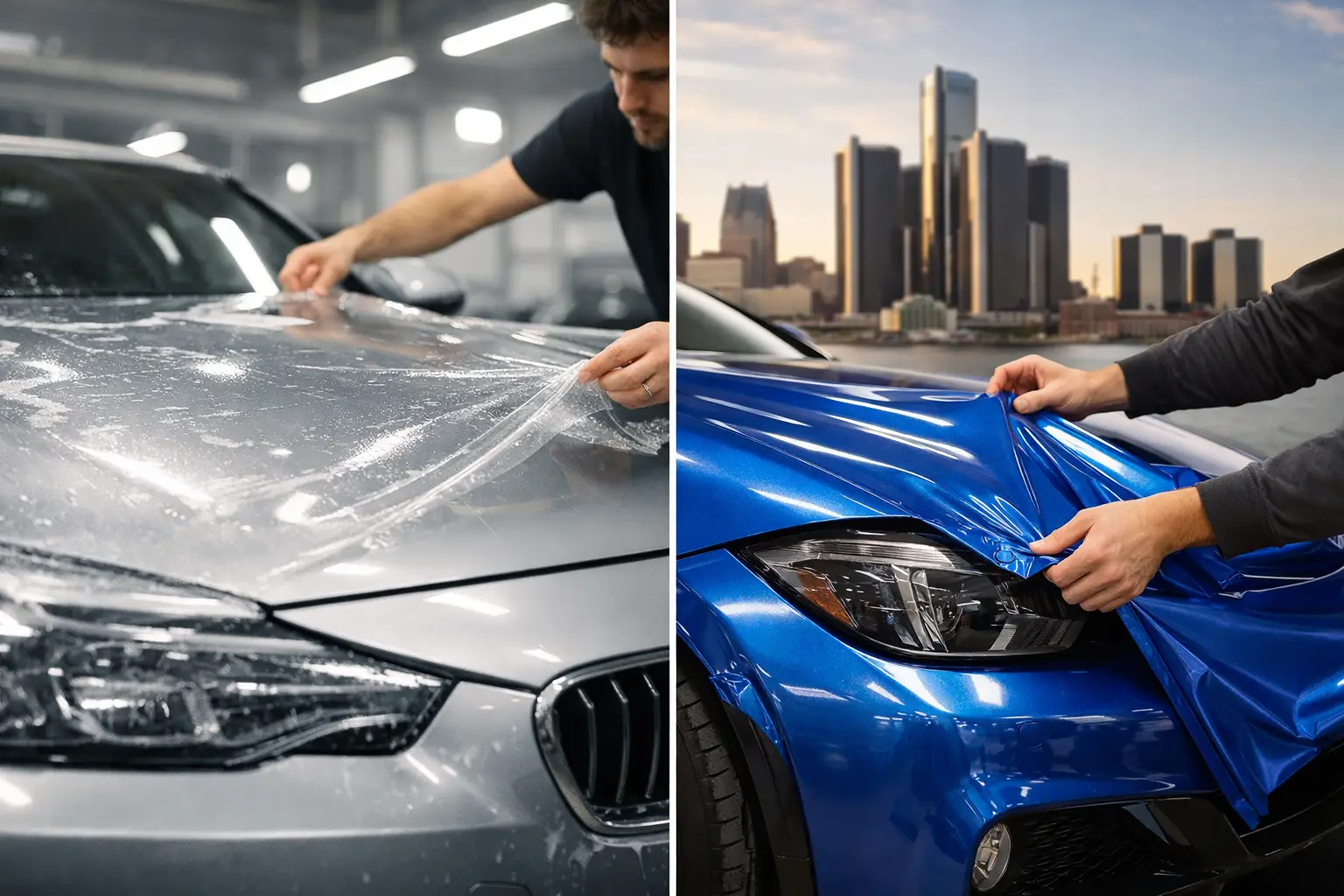
A fresh paint chip on the front bumper can change how you feel about a new vehicle fast. For Metro Detroit owners dealing with expressway debris, construction zones, winter grit, and daily parking, the PPF versus vinyl wrap decision comes down to one question: do you want to protect your factory paint, change the vehicle's appearance, or both?
Paint protection film and vinyl wrap can both transform a vehicle, but they are built for different jobs. Understanding that difference before installation helps you spend where it matters most and avoid choosing a cosmetic product when your real priority is long-term protection.
PPF Versus Vinyl Wrap: The Core Difference
Paint protection film, often called PPF or clear bra, is a thick, clear urethane film applied over painted surfaces. Its primary purpose is defense. Quality PPF helps shield paint from rock chips, road debris, minor scuffs, bug acids, salt, and everyday abrasion. Most premium films also have self-healing properties, meaning light swirls and surface marks can fade with heat from the sun or warm water.
Vinyl wrap is a thinner, color or finish-changing film. It is designed mainly for visual customization. A wrap can give a vehicle a satin, matte, gloss, metallic, color-shifting, or patterned finish without permanently repainting it. It adds a light barrier between the outside world and the paint, but it is not engineered to absorb impacts the way PPF is.
That does not make one product better across the board. It makes each product better for a different goal. If preserving factory paint from physical damage is the priority, PPF is the stronger option. If changing the color or creating a distinct look is the priority, vinyl wrap makes more sense.
How Much Protection Does Each Provide?
The thickness of PPF is what separates it from vinyl. PPF is designed to take the hit from small stones and road debris before they reach the clear coat. On vehicles driven regularly through Livonia, Detroit, Novi, and surrounding areas, that matters most on high-impact panels: the front bumper, hood, fenders, mirror caps, rocker panels, and rear wheel arches.
A vinyl wrap can help reduce very light wash marks, minor scuffs, and UV exposure. It can also protect the paint underneath from normal environmental wear while it remains properly installed. However, sharp debris can cut through vinyl more easily, and a vinyl wrap will not reliably prevent the kind of rock chips that show up after a season of highway driving.
PPF is also more forgiving when it comes to superficial marks. Many modern films self-heal under heat, which helps keep high-touch areas looking cleaner over time. Vinyl does not have the same healing capability. Once it is scratched, gouged, or torn, repair usually means replacing the affected section.
Appearance: Clear Protection or a New Look
A professionally installed clear PPF is meant to be difficult to notice. It preserves the original paint color and gloss while adding protection. For a new luxury vehicle, a performance car, or a vehicle with factory paint you want to keep pristine, that is a major advantage.
PPF is not limited to clear gloss. Matte and satin PPF can change the finish of a gloss-painted vehicle while still delivering serious protection. This is a strong option for owners who want a stealthier appearance without sacrificing the film's protective role. The available finish choices are more limited than vinyl, but the result can be exceptionally clean.
Vinyl offers much broader creative range. It is the right material when your vision includes a new color, racing stripes, a carbon-fiber-style accent, a custom roof, blacked-out trim, or a finish that the factory never offered. A well-installed wrap can make a daily driver look completely different without the cost and permanence of a respray.
The key is setting realistic expectations. A vinyl wrap can look excellent, but it will not make damaged paint disappear. Chips, deep scratches, peeling clear coat, and rough bodywork may still show through the film. Paint correction or panel repair should be considered before either PPF or vinyl installation when the surface needs it.
Durability, Maintenance, and Real-World Use
Both products require professional preparation and installation, but their expected service lives and maintenance needs differ. Premium PPF is generally selected for longer-term ownership. With proper care, it can protect high-impact areas for years while maintaining clarity and gloss. Its durability makes it especially valuable for owners who plan to keep a vehicle, want to preserve resale value, or simply do not want to see rock chips accumulate on the front end.
Vinyl wrap longevity depends on film quality, installation quality, exposure, vehicle storage, and maintenance. Horizontal surfaces that see constant sun can age faster than vertical panels. Darker colors and textured finishes may also require more attentive care to keep their appearance consistent.
Neither option eliminates the need to wash the vehicle correctly. Abrasive brushes, harsh chemicals, neglected bug residue, and aggressive pressure washing can shorten the life of any film. PPF is more resilient, but it still benefits from thoughtful maintenance. Vinyl needs additional caution around seams and edges, where direct high-pressure water can create problems if used improperly.
Ceramic coating can be applied over PPF and, in many cases, over vinyl wrap to improve water behavior, simplify washing, and enhance surface slickness. It does not replace PPF. Ceramic coating helps with chemical resistance and cleaning, while PPF provides the impact resistance that a coating cannot.
Cost: Pay for the Result You Need
PPF typically costs more than vinyl wrap when covering comparable areas because the material is thicker, more protective, and more demanding to install precisely. Coverage level also changes the investment. A partial front package, full front coverage, and full-vehicle PPF each serve different budgets and driving habits.
Vinyl wrap pricing varies based on vehicle size, film type, surface complexity, and whether trim, door jambs, or difficult panels are included. A full color change involves substantial labor, especially when a clean, factory-like result is the goal. It is not simply a matter of laying film over the exterior.
For many owners, the best value is not full coverage of everything. It is targeted protection where the vehicle needs it most. A daily-driven SUV may benefit most from full-front PPF and rocker panel coverage. A weekend car may justify additional coverage for its lower doors, rear quarters, and other areas exposed to debris. A leased vehicle may be a better candidate for vinyl accents or a wrap if appearance customization matters more than long-term paint preservation.
Which Option Fits Your Vehicle?
Choose PPF when paint preservation is the main objective. It is the stronger choice for new vehicles, high-value vehicles, sports cars, frequent highway drivers, and owners who want to reduce chips and wear in vulnerable areas.
Choose vinyl wrap when you want a color change or a more personalized finish. It offers more visual freedom and is ideal for owners who want their vehicle to stand apart without committing to permanent paintwork.
Consider a combination when you want both. Many owners use PPF on the front bumper, hood, fenders, mirrors, rockers, and other high-impact zones, then add vinyl wrap to non-impact areas for a custom color or finish. This approach can balance appearance goals with practical protection.
Installation quality matters just as much as product selection. Proper decontamination, paint inspection, edge work, panel preparation, and film handling determine whether the finished vehicle looks refined or rushed. At MYNT Customs, the recommendation should be based on how you drive, how long you plan to own the vehicle, and which areas you want to protect or transform.
The right film should make ownership easier, not create regret after the first road trip. Start with the condition of your paint and the way you actually use the vehicle, then build a protection or customization plan that fits both.