How to Choose the Best PPF for Your Vehicle
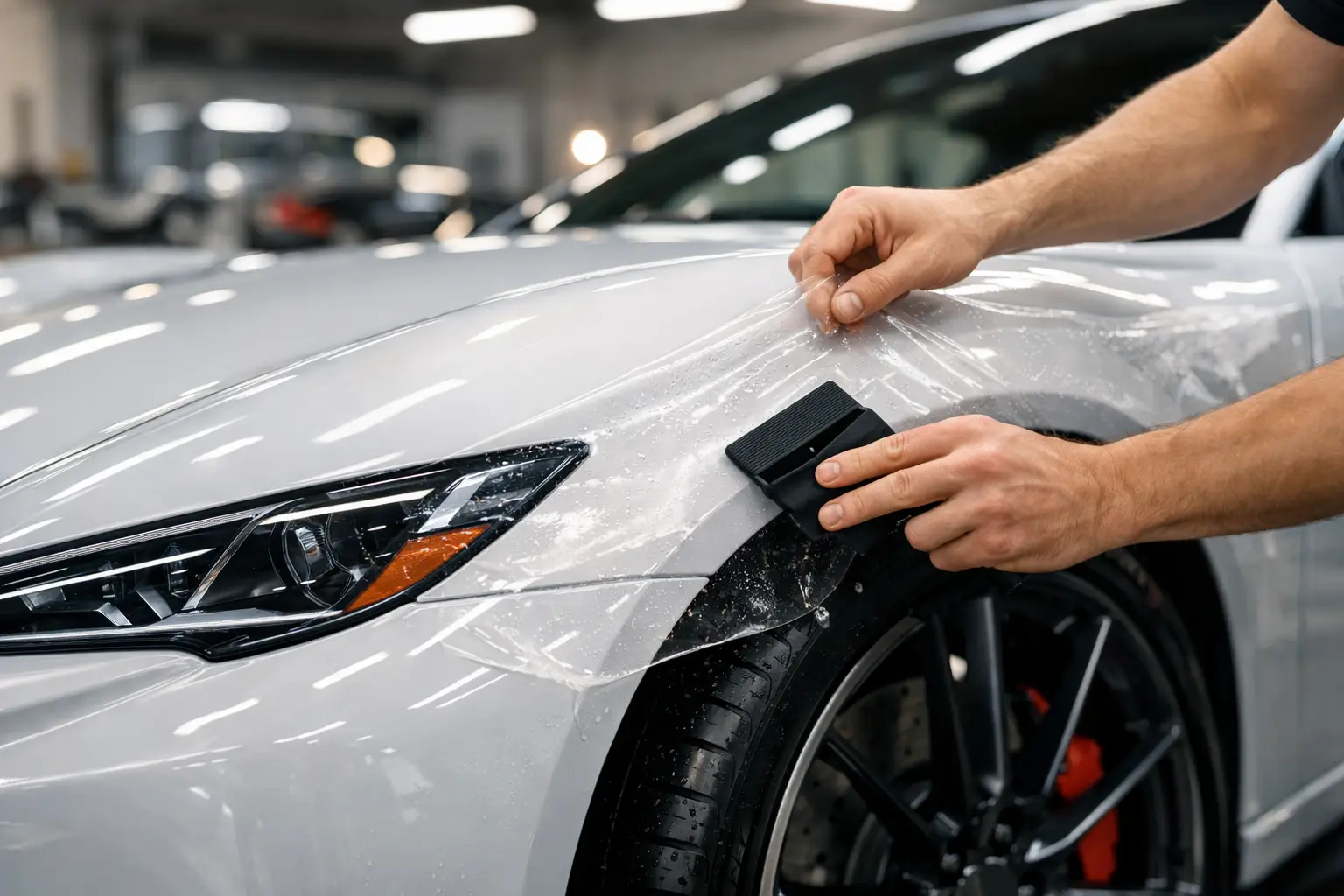
A fresh front bumper can pick up chips faster than most owners expect. Highway construction, loose gravel, winter road debris, parking lot scuffs, and everyday miles all work against factory paint. The best PPF creates a nearly invisible barrier in the areas that take the most abuse, helping your vehicle keep its finish and its value without changing the look you bought it for.
Paint protection film is not a one-size-fits-all purchase. Film quality matters, but so do the coverage plan, the finish you choose, the condition of the paint underneath, and the installer’s preparation and pattern work. For Metro Detroit drivers, those details determine whether PPF looks factory-clean for years or becomes an expensive compromise.
What Makes the Best PPF?
The best PPF is a high-quality urethane film that protects painted surfaces from rock chips, scratches, road rash, bug acids, and light abrasion while remaining optically clear. Most premium films are engineered with a self-healing top coat. When the surface receives light swirls or fine scratches, warmth from sunlight, warm water, or a heat source can help the top coat return to a smoother appearance.
That self-healing feature is valuable, but it should not be confused with invincibility. PPF can absorb the impact that would otherwise chip your paint, but a hard enough strike can still cut or puncture the film. The advantage is that the damaged section of film can often be replaced while the factory paint underneath remains intact.
Quality film should also resist yellowing, staining, cracking, and lifting at the edges. Clear film needs to stay clear, especially on white, silver, and lighter-colored vehicles where discoloration is easy to see. A reputable manufacturer warranty provides added confidence, but the real-world result still depends heavily on proper installation and care.
Film thickness is only one part of protection
Many shoppers start by comparing mil thickness. Thickness can contribute to impact resistance, but more material is not automatically better. A film must also conform cleanly around curves, hold its shape at edges, maintain clarity, and recover from normal surface marring. A thicker film that is difficult to install neatly may not provide the appearance a premium vehicle deserves.
Instead of choosing film on thickness alone, consider the full package: optical clarity, self-healing performance, hydrophobic properties, stain resistance, warranty coverage, and installer experience. The goal is protection you do not notice until it prevents a repair.
Choose Coverage Based on How You Drive
The right coverage package depends on your vehicle, your routes, and how long you plan to keep it. A daily driver that spends time on I-96, I-275, or M-14 faces a different level of exposure than a weekend car kept mostly in the garage.
A partial front package generally covers the high-impact front areas, often including the front bumper, part of the hood and fenders, mirror caps, and sometimes headlights. It is a practical option for owners who want targeted protection and controlled cost. The trade-off is visible coverage lines on the hood and fenders, particularly when the vehicle is dusty or viewed closely.
A full front package extends film across the complete hood, full front fenders, bumper, mirrors, and often headlights. Because coverage reaches the natural panel edges, it offers a cleaner appearance and stronger protection for the surfaces that take the most highway damage. For many new luxury vehicles, performance cars, and long-term daily drivers, this is the most balanced protection package.
Full-vehicle PPF protects every painted panel, including doors, quarter panels, roof, trunk, and rear bumper. It is the strongest choice for owners who want consistent coverage on a high-value vehicle, a vehicle with a specialty finish, or a car that sees frequent road use. It is also a significant investment, so it makes the most sense when preserving paint condition is a priority rather than an afterthought.
Best PPF Finishes for Different Vehicle Goals
Clear gloss PPF is the most common choice because it maintains the vehicle’s original paint color and finish. On a well-corrected paint surface, premium gloss film can add a smooth, refined look while putting the protection where it matters most. This is the right direction for owners who want their vehicle to look stock, just better protected.
Matte or satin PPF is a different decision. It can preserve a factory matte paint finish or transform gloss paint into a satin appearance while adding physical protection. The result can be striking, especially on performance vehicles and trucks, but installation quality becomes even more visible with matte films. Poor alignment, contamination, or inconsistent panel coverage can interrupt the uniform finish.
Colored and specialty films can also change a vehicle’s appearance, but they should be selected with the same attention to quality and installation as clear film. If the main goal is color change rather than protection from impact, a vinyl wrap may be a more appropriate solution. PPF is the better fit when surface protection is the first priority and the appearance change is secondary.
Installation Quality Matters as Much as the Film
Premium film cannot compensate for poor preparation. Before installation, the vehicle should be carefully washed and decontaminated so bonded debris, road film, and surface residue are removed. Paint correction may also be recommended if there are noticeable swirls, scratches, or defects. PPF preserves the surface beneath it, which means installing it over visible imperfections can lock those imperfections in place.
A professional installation also relies on precise panel patterns, careful edge work, and a controlled environment. Whenever practical, wrapped edges help reduce visible lines and give the film a more finished appearance. Some panels have complex shapes or tight gaps where a fully wrapped edge is not possible. A trustworthy installer explains those limitations upfront instead of promising an unrealistic invisible result.
Small amounts of moisture or haze can be normal shortly after installation, especially around complex curves. Those areas typically settle as the installation solution evaporates. Dirt under the film, obvious trapped debris, misaligned patterns, lifting edges, or deep stretch marks are not normal details to accept on a premium installation.
Questions to Ask Before Choosing a PPF Shop
A few direct questions can reveal whether a shop is focused on lasting results or simply selling a package. Ask what brand and film line will be installed, whether the film includes a manufacturer warranty, and how warranty claims are handled. Confirm exactly which panels are included, not just the name of the package.
Also ask how the shop prepares the paint, whether light correction is included or available, and which edges can be wrapped. Request clear guidance on curing time, washing, and maintenance. A quality provider should be comfortable explaining the process in plain language and showing examples of finished work on vehicles similar to yours.
Price deserves context as well. The lowest quote may reflect less coverage, lower-grade material, fewer preparation steps, or limited time spent on edge finishing. The highest quote is not automatically the best choice either. Compare the actual film, coverage boundaries, paint prep, warranty, and workmanship rather than comparing package names alone.
Maintaining PPF After Installation
Once the film has cured, maintenance is straightforward. Wash regularly with pH-balanced automotive soap, use clean microfiber towels, and avoid aggressive scrubbing over contaminated panels. Removing bug residue, bird droppings, road salt, and fuel spills promptly helps protect both the film and the paint around it.
Avoid aiming a pressure washer directly at film edges from close range. Automatic car washes with abrasive brushes can create unnecessary wear and may dull the finish over time. Touchless washes are less abrasive, though hand washing remains the most controlled approach.
Ceramic coating can be applied over PPF to improve water behavior and simplify cleaning. It does not replace paint protection film and does not add meaningful rock-chip resistance. Think of PPF as the impact barrier and ceramic coating as a maintenance and gloss enhancement layer. The two services can work well together when the vehicle owner wants both protection and easier upkeep.
For Livonia and Metro Detroit vehicle owners, the strongest PPF decision is usually made before the first winter commute or highway road trip. Choose coverage that matches your driving habits, insist on clean preparation, and work with an installer who treats every edge and panel as part of the finished vehicle. MYNT Customs can help you build a protection plan that makes sense for how you actually use your car.