Carpet Stain Removal Example for Your Vehicle
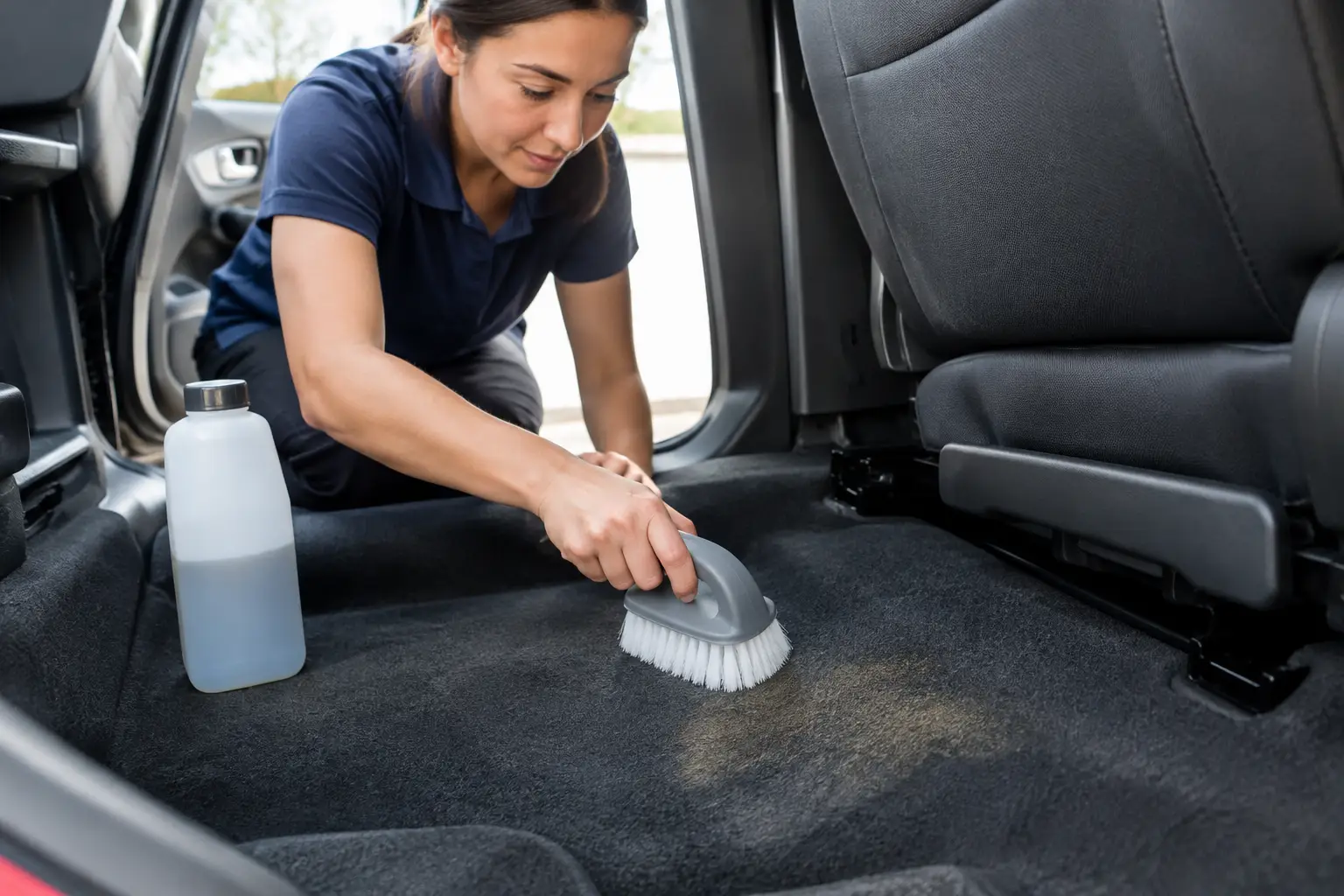
A coffee spill in a vehicle can look minor at first, then leave behind a dark ring, stiff carpet fibers, and a sour smell that comes back every time the cabin warms up. This carpet stain removal example shows why professional interior detailing is about more than spraying cleaner and scrubbing until the spot fades. The right process removes the contamination below the surface while protecting the carpet, backing material, padding, and surrounding trim.
A Realistic Carpet Stain Removal Example
Picture a daily-driven SUV with a medium-gray carpeted rear floor area. A passenger drops a 16-ounce iced coffee with cream and sugar. Much of the liquid lands on a removable floor mat, but enough reaches the carpet near the seat track to create a visible brown stain.
The owner wipes it up with napkins at a gas station, which is better than leaving it to soak. Still, the napkins only absorb liquid from the top. Coffee dye, milk residue, sugar, and moisture remain in the carpet pile and can travel deeper into the backing and padding. By the next day, the visible area is smaller, but the carpet feels tacky and the odor is noticeable.
A proper assessment begins with identifying what caused the stain and how far it spread. Coffee without additives is handled differently than coffee with dairy and sugar. Those added ingredients make the job more complicated because they leave organic residue that can create odor and attract more dirt over time.
The technician also checks the location. Carpet near seat tracks, wiring connections, and under-seat electronics calls for controlled moisture use. Flooding the area with store-bought cleaner may make the stain look better temporarily while creating a larger moisture problem underneath.
The Professional Removal Process
The first step is dry soil removal. The carpet is vacuumed thoroughly to pull up grit, debris, and loose particles from the fibers. Skipping this step can turn dry dirt into muddy residue once cleaning solution is introduced.
Next, the stained area receives a cleaner selected for the spill. For a coffee stain with cream and sugar, the goal is to break down both the colored tannins and the organic residue. The product is applied in a measured amount rather than saturating the carpet. Agitation follows with an appropriate interior brush to work the solution through the fibers without fraying them.
At this stage, technique matters. Aggressive scrubbing can distort carpet fibers and spread the stain beyond its original edges. It can also push contamination deeper. A controlled approach lifts residue from the carpet rather than driving it into the backing.
The area is then extracted using professional equipment. Extraction flushes the loosened contamination from the fibers while recovering the solution and moisture. Depending on the severity of the spill, this may take more than one treatment cycle. The technician evaluates the water being pulled from the carpet and checks whether discoloration is still transferring.
For this example, the first extraction removes most of the visible brown color, but a faint shadow remains. That does not automatically mean the stain is permanent. It may indicate that coffee dye has bonded to the fibers or that residue remains below the surface. A targeted spot treatment is applied, followed by another controlled extraction.
Once the stain is removed, the carpet is groomed so the fibers dry evenly and retain a clean, uniform appearance. Air movement is used to reduce drying time. The final inspection includes checking the carpet after it begins to dry, because some stains can reappear through wicking.
What Is Wicking?
Wicking occurs when moisture and residue lower in the carpet or padding rise back to the surface as the area dries. It is one reason a stain can seem gone immediately after cleaning and return a few hours later.
In the coffee spill example, a light brown shadow could reappear if the original spill reached the backing. Addressing it may require another extraction pass or a specialized treatment to prevent residue from moving upward. This is where professional equipment and experience provide a clear advantage over a quick surface clean.
Why Household Methods Can Fall Short
Many vehicle owners reach for dish soap, club soda, all-purpose cleaner, or a rental carpet machine. These methods can help in a fresh, small spill, but they carry trade-offs.
Dish soap may cut through oily residue, but it can be difficult to rinse completely from automotive carpet. Leftover soap attracts dirt and can leave the area feeling stiff. Club soda may dilute a fresh stain, but it does not remove dairy, sugar, or odor-causing residue on its own. Strong household cleaners can discolor fibers, leave a chemical smell, or affect nearby plastic and trim.
Rental extractors can be useful for large areas, yet they may not have the suction power or controlled cleaning approach needed for an automotive interior. Vehicle carpet is not the same as wall-to-wall home carpet. It is often denser, shaped around contours, and installed over insulation, padding, wiring, and metal floor sections that should not remain wet.
The goal is not simply to make a stain less visible. It is to remove the source of the discoloration and odor while leaving the interior dry enough to return to normal use without issues.
When a Stain Needs More Than Basic Detailing
Some carpet stains respond well to a standard interior detail. Others need more time, testing, and specialized treatment. Age is a major factor. A fresh coffee spill is typically more manageable than one that has been repeatedly heated by summer temperatures and ground into the carpet for months.
The stain type matters too. Grease, motor oil, ink, pet accidents, vomit, makeup, melted candy, and colored sports drinks all behave differently. Pet accidents are especially important to treat thoroughly because odor can remain below the carpet surface even after the visible mark disappears. In certain cases, the carpet may need to be lifted for deeper treatment if contamination has reached the padding.
There are also situations where complete removal is not realistic. Bleach, harsh chemicals, dye transfer, and burns can permanently alter carpet color or texture. An honest professional assessment should set that expectation early. Improvement may still be substantial, but cleaning cannot replace damaged fibers or restore color that has been chemically removed.
How to Respond Before the Stain Sets
If a spill happens while you are out, blot it immediately with a clean microfiber towel or absorbent cloth. Press down firmly and lift straight up. Do not rub in circles, which spreads the spill and roughens the carpet pile.
Use a small amount of clean water only if needed, then blot again. Avoid pouring cleaner directly into the carpet, especially around seats and center-console areas. If the spill contains milk, cream, food, or an odor-producing substance, arrange professional cleaning sooner rather than later. Time, heat, and repeated foot traffic make the job more difficult.
It also helps to remove the floor mat and inspect beneath it. A mat may hide moisture while allowing residue to soak into the carpet below. Cleaning both surfaces prevents a clean-looking mat from being placed back over an untreated area.
Protecting the Interior After Stain Removal
Once the carpet is clean, prevention is straightforward. Quality floor mats provide a first line of defense against coffee, slush, road salt, and everyday debris. Regular vacuuming keeps abrasive grit from embedding in the fibers, and prompt spot care prevents a minor spill from becoming a larger restoration project.
For Metro Detroit drivers, winter slush and road salt deserve the same attention as food and drink spills. Salt residue can leave white marks, stiffen carpet fibers, and build up in areas that are easy to overlook, including rear footwells and beneath removable mats.
A professional interior detail from MYNT Customs can address stains, odors, embedded debris, and neglected carpet areas as part of a cleaner, more valuable vehicle presentation. Whether you are preparing a lease return, getting ready to sell, or simply want your daily driver to feel right again, treating the stain early protects more than appearance. It helps preserve the comfort and condition you notice every time you open the door.