Paint Correction for Black Cars: What It Takes
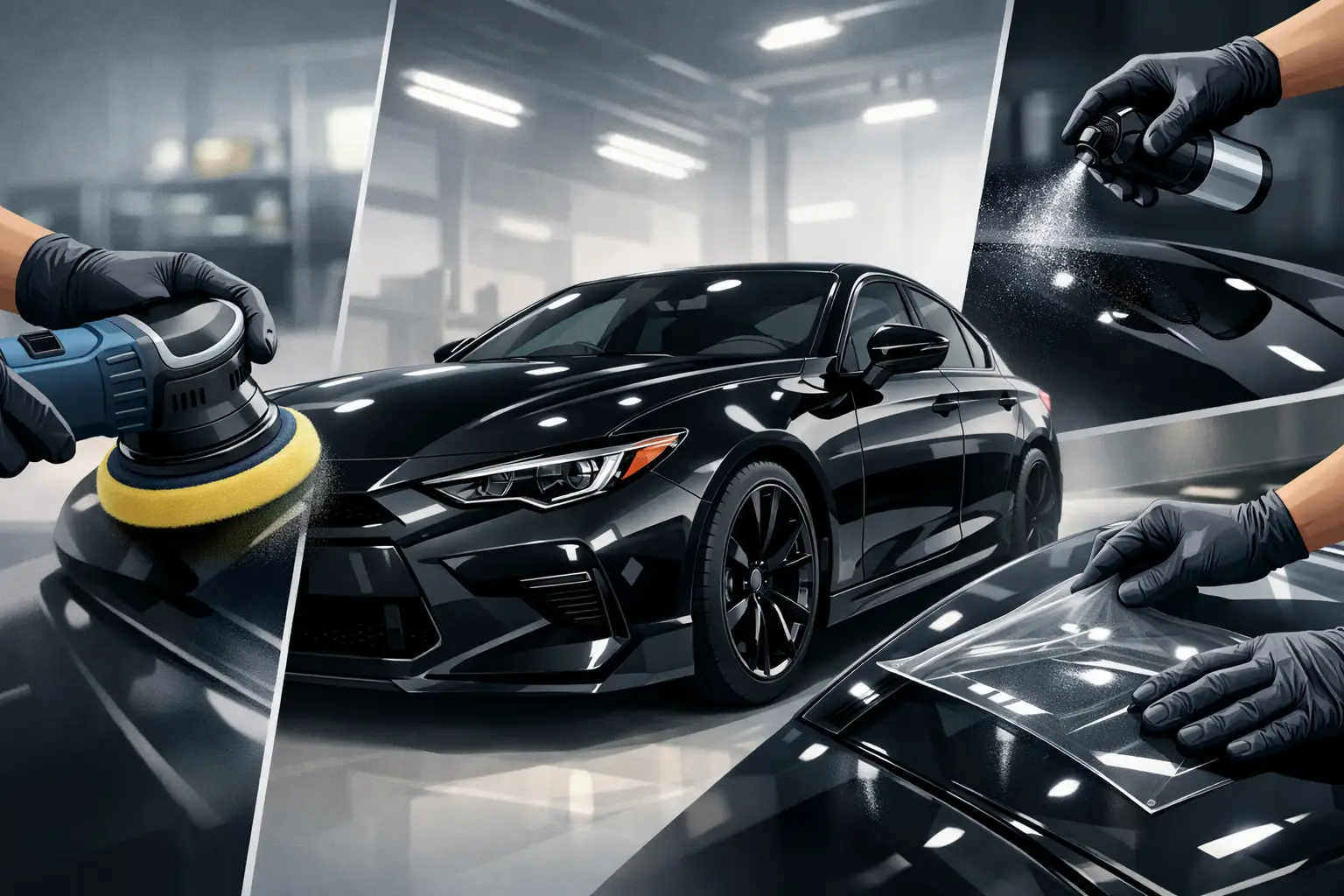
Black paint has no place to hide. Under direct sun, parking-lot lights, or a garage LED, even light wash marring can turn a deep finish into a web of fine scratches. Professional paint correction for black cars is designed to reduce those defects safely, restoring the crisp reflections and rich color that made you choose black in the first place.
For owners in Livonia and Metro Detroit, the difference is especially noticeable after a winter of road film, salt residue, automatic washes, and frequent temperature changes. Correction is not simply a detail with more polish. It is a measured process of evaluating the paint, choosing the right polishing system, and improving clarity without taking unnecessary material from the clear coat.
Why Black Paint Shows Every Imperfection
Most modern vehicles use a clear coat over the color layer. Swirls, light scratches, water-spot etching, oxidation, and haze disrupt that smooth clear surface. When light hits those defects, it scatters instead of reflecting cleanly. On black paint, that scattered light is highly visible.
The issue is not that black paint is always softer than other colors. Paint hardness varies by manufacturer, model, year, repaint history, and even individual panel. Black simply provides maximum contrast. A faint defect that may blend into silver, gray, or white paint can stand out immediately on a dark finish.
Common causes include tunnel car washes, dirty wash mitts, aggressive drying towels, winter grime, poor dealer prep, and improper polishing. Even a brand-new black vehicle can arrive with light marring from transportation, storage, or dealership washing. That is why a visual inspection under proper lighting matters more than assuming paint is perfect because the vehicle is new.
What Paint Correction for Black Cars Actually Does
Paint correction uses machine polishing, professional pads, and abrasive compounds or finishing polishes to level defects in the clear coat. The goal is not to cover swirls temporarily. It is to refine the surface so scratches and haze are reduced or removed based on what the paint can safely support.
A one-step correction usually focuses on noticeable gloss improvement and reduction of lighter defects. It can be a strong choice for newer vehicles with mild wash marring, daily drivers, or owners who want a major visual upgrade without pursuing every isolated mark.
A multi-step correction starts with a more corrective polishing stage, then follows with a refining polish to improve clarity and depth. This approach is often appropriate for black vehicles with heavier swirls, dullness, compounding haze, or more established defects. It takes more time and requires more paint measurement and inspection, but the finish can look dramatically sharper.
No reputable shop should promise that every scratch will disappear. Some defects are too deep to safely level, especially if they catch a fingernail. Areas with thin paint, prior bodywork, rock chips, or touch-up paint also require a conservative approach. The best result is one that looks exceptional while preserving the long-term health of the finish.
Correction is not the same as filling
Some waxes, glazes, and consumer-grade products can hide minor swirls with oils or fillers. They may make a black car look better for a short time, but the defects often reappear after a few washes or after the product wears away.
True correction changes the condition of the clear coat itself. A quality shop will still use protection afterward, but the gloss should come from a properly refined surface rather than a temporary disguise.
The Process Behind a Clean, Deep Finish
Quality results begin before the polisher touches the paint. The vehicle needs a thorough wash and chemical decontamination to remove road film, embedded iron particles, and other bonded contamination. A clay treatment or synthetic clay process may also be used when needed to create a clean, smooth surface.
Next comes inspection. Paint depth readings help identify panels that may have been repainted or have limited clear coat available. Lighting reveals defects that are easy to miss outdoors. On black paint, this step is critical because a panel can look clean in shade but show heavy marring under focused light.
A technician then performs a test spot. This is where the process is tailored to the vehicle rather than treated as a fixed package. The right pad, machine movement, polish, pressure, and number of passes depend on how the paint responds. A successful test spot establishes the safest method for reaching the desired level of improvement.
During polishing, sensitive trim, edges, badges, and panel transitions are protected. Each section is worked carefully, then inspected again to confirm clarity. Once correction is complete, the paint is prepared for a protective product that supports the finish and makes maintenance easier.
How Much Correction Does Your Black Car Need?
The right level depends on the car's condition, age, use, and your expectations. A leased daily driver may benefit most from a gloss-focused one-step polish and durable protection. A weekend performance car or luxury vehicle may justify a more extensive multi-step correction before a ceramic coating or paint protection film installation.
Consider what you see in normal use. If the paint appears dull in sunlight, shows circular wash marks around the hood and doors, or loses definition under garage lights, correction is likely worth considering. If the vehicle has only light defects and is otherwise well cared for, an enhancement polish may provide the look you want without more aggressive work.
Deep scratches, chips, and paint-transfer damage may require a different solution. Paint correction can often improve the surrounding finish, but it cannot replace missing paint. In some cases, touch-up work, wet sanding, or body repair is the better path. A professional assessment should set clear expectations before work begins.
Protecting Corrected Black Paint
Correction improves the appearance of paint, but it does not make clear coat invincible. Without protection and proper washing, new marring can gradually return. The best protection depends on how the vehicle is driven, stored, and maintained.
A ceramic coating adds a durable, glossy protective layer that helps reduce the adhesion of dirt and makes routine washing easier. It does not prevent rock chips or eliminate the need for careful washing, but it can help preserve the corrected appearance and make the dark finish easier to maintain.
Paint protection film is the stronger choice for high-impact areas such as the front bumper, hood, fenders, mirrors, rocker panels, and behind the wheels. It is designed to help defend against stone chips, road debris, and everyday abrasion. For black vehicles that see regular highway mileage, combining correction with targeted PPF and a ceramic coating can be a practical long-term protection plan.
At MYNT Customs, the goal is to match the correction and protection approach to how you actually use the vehicle, not push a one-size-fits-all package.
Wash technique matters after correction
The way a black car is washed will determine how long the finish stays sharp. Use a pH-balanced shampoo, clean microfiber wash media, and separate tools for paint and wheels. Rinse thoroughly before making contact with the surface, and avoid washing in direct sunlight when possible.
Drying deserves the same attention. A clean, high-quality microfiber drying towel and a dedicated drying aid reduce friction. Blotting or gently pulling the towel across well-lubricated paint is safer than pressing hard or using old towels that may hold embedded grit.
Automatic brush washes remain one of the fastest ways to reintroduce swirls. Touchless washes are less risky from a paint-contact standpoint, though their stronger chemicals can affect some protective products over time. When convenience is necessary, a touchless wash followed by a careful hand dry is generally the better compromise.
Is Paint Correction Worth It for a Black Vehicle?
For many owners, yes. Black paint rewards careful correction more visibly than almost any other color. The vehicle can look cleaner, newer, and more expensive because its reflections become sharper and its color gains depth. That visual improvement can also support resale presentation, especially when paired with regular maintenance.
The value is strongest when correction is followed by realistic protection and a better wash routine. Correcting a heavily swirled finish only to return to abrasive wash habits will shorten the life of the result. On the other hand, even a moderate correction paired with thoughtful maintenance can keep a black vehicle looking noticeably better for years.
If your black paint looks gray in the sun, hazy under lights, or scratched after every wash, the answer is not always more wax. A careful inspection and the right level of correction can bring back the depth you expected, then give you a finish worth protecting.