Is a Novi Paint Correction Service Worth It?
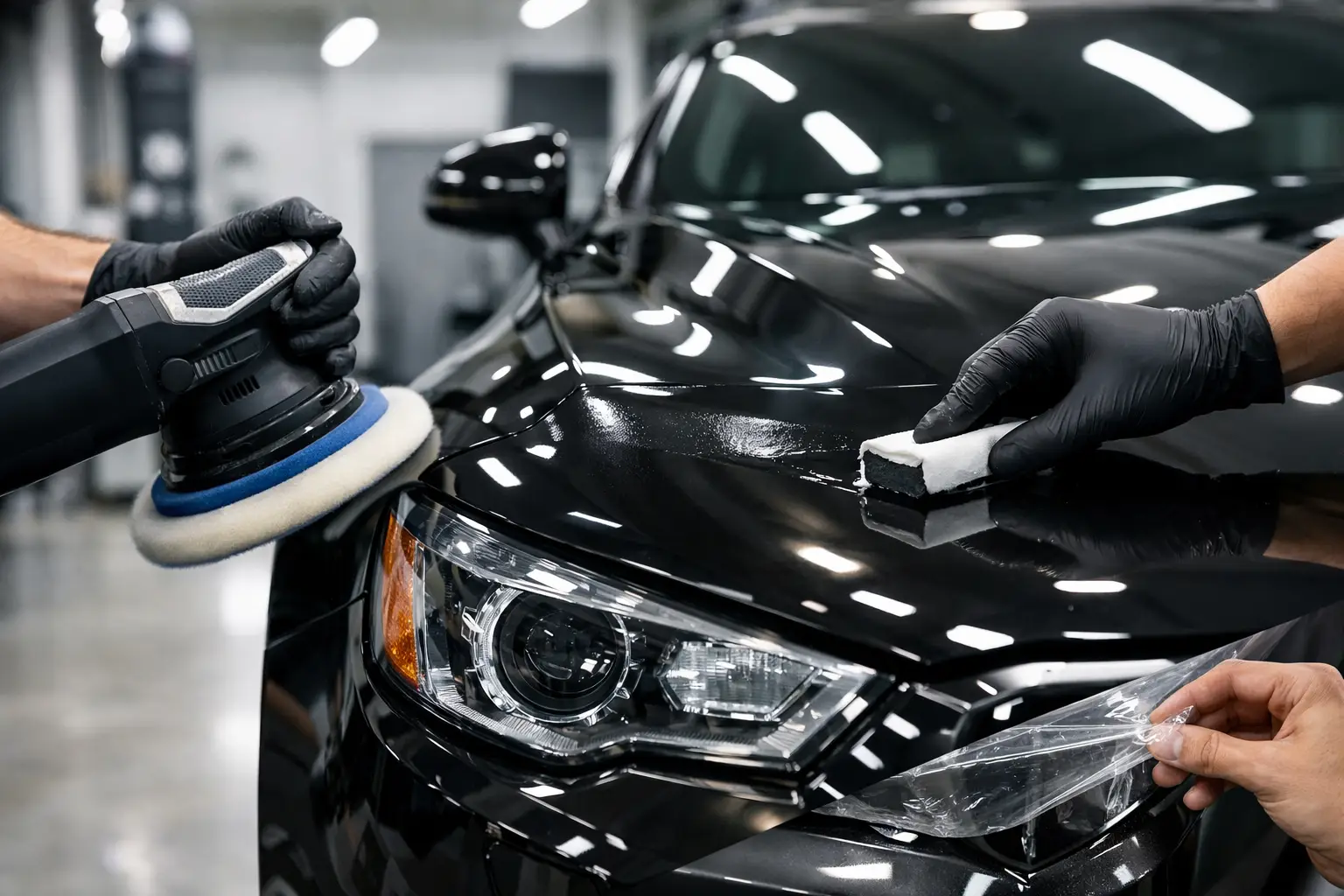
A vehicle can be clean and still look tired. Under direct sunlight, parking lot lights, or a garage LED, swirl marks, random scratches, haze, and dull reflections become hard to ignore. A professional Novi paint correction service addresses those defects at the source by refining the clear coat rather than simply covering imperfections with wax or gloss products.
For drivers in Novi and across Metro Detroit, paint correction is often the step that makes a vehicle look dramatically newer before ceramic coating, paint protection film, resale, or a special event. The right service is not about making unrealistic promises. It is about carefully measuring the paint, choosing the appropriate level of correction, and delivering the best finish possible while respecting the limits of the vehicle's clear coat.
What Paint Correction Actually Does
Modern automotive paint usually includes a colored base coat protected by a clear coat. Most visible swirls and light scratches sit within that clear coat. They scatter light instead of reflecting it evenly, which is why paint can look gray, hazy, or scratched even after a thorough wash.
Paint correction uses professional polishing machines, pads, compounds, and finishing polishes to level defects within the clear coat. The goal is to create a smoother surface that reflects light more cleanly. On a black vehicle, that often means deeper reflections and sharper contrast. On lighter colors, the change may show up as clearer metallic flake, better gloss, and a cleaner-looking finish.
Correction is different from a quick polish or an all-in-one detail. A quick enhancement can improve gloss temporarily and hide some flaws with fillers. True correction focuses on permanently reducing defects when it is safe to do so. That process takes time, technical judgment, and a controlled approach.
When a Novi Paint Correction Service Makes Sense
Paint correction is a strong option when the vehicle has visible wash-induced swirls, light scratches around door handles, water-spot etching, oxidation, holograms from prior polishing, or a dull finish that no longer reflects well. It is also valuable before installing a ceramic coating. A coating adds protection and gloss, but it does not remove scratches already present. Applying one over swirled paint can lock in the defects beneath it.
New vehicles can benefit as well. “New” does not always mean flawless. Dealer washing, transport, lot exposure, and rushed prep work can leave behind marring before the owner even takes delivery. A paint inspection before coating or PPF installation helps ensure the finish starts at the right standard.
For leased vehicles, the right level of correction depends on the return timeline and overall condition. A full multi-step correction may not be necessary if the goal is simply to improve presentation before turn-in. For an enthusiast-owned vehicle or a luxury daily driver, a more thorough correction may be worth the investment because the owner will enjoy the result for years.
One-Step vs. Multi-Step Correction
Not every vehicle needs the same correction package. The condition of the paint, paint hardness, color, age, and owner expectations all matter.
A one-step correction is designed to noticeably improve gloss and reduce a meaningful amount of light swirls and haze in a single polishing stage. It is often a smart choice for well-maintained daily drivers, newer vehicles with moderate defects, and owners who want a major visual improvement without pursuing near-perfect paint.
A multi-step correction uses a more aggressive cutting stage followed by a finer finishing polish. This approach is better suited for vehicles with heavier swirls, deeper wash damage, oxidation, or poor results from previous detailing work. It can deliver a more refined finish, but it also requires more labor and should only be performed when the paint thickness and defect depth support it.
No responsible shop should promise to remove every mark from every panel. Some scratches extend beyond the clear coat. Others may be too deep to safely level without compromising the paint. A quality correction service improves what can be improved safely, then explains where touch-up paint, panel repair, or realistic expectations are the better path.
The Process Behind a Better Finish
Professional paint correction starts well before a polishing machine touches the vehicle. The paint must be cleaned and decontaminated so bonded contaminants, road film, and embedded fallout do not interfere with the polishing process. This step can include a careful hand wash, chemical decontamination, and mechanical decontamination when needed.
Next comes a detailed inspection. Proper lighting reveals defects that are invisible in shade or under cloudy skies. Paint thickness readings can help identify areas that may have been repainted or have limited clear coat available. Technicians then perform test spots to determine the least aggressive combination of pad and polish that produces the desired improvement.
Panels are corrected methodically, with close attention paid to edges, body lines, trim, and heat management. The vehicle is then inspected again to confirm the finish is free from polishing residue and that the true result is visible. At MYNT Customs, this process is treated as precision reconditioning, not a fast add-on to a wash service.
Paint Correction Needs Protection Afterward
A corrected finish looks its best when it is protected immediately. Polishing improves the paint surface, but it does not make it immune to UV exposure, road grime, bird droppings, salt, or improper washing. Without protection and maintenance, new swirls can gradually return.
Ceramic coating is a popular follow-up because it adds durable chemical resistance, strong water behavior, easier cleaning, and enhanced gloss. It is especially useful for owners who want the corrected look to stay cleaner and easier to maintain through Michigan weather. A coating is not scratch-proof, but it can make routine maintenance more manageable and help reduce contamination from bonding strongly to the paint.
Paint protection film is the better choice for high-impact areas where rock chips and road debris are the primary concern. Many owners combine both services: PPF on vulnerable panels such as the front bumper, hood, mirrors, and rocker panels, then ceramic coating on the remaining painted surfaces. The right combination depends on where the vehicle is driven, how long it will be kept, and how much physical protection is needed.
How to Keep Corrected Paint Looking Better
The biggest threat to a corrected finish is often washing technique. Automatic brush tunnels can quickly add fresh swirls, especially on dark paint. If a tunnel wash is necessary, a touchless option is generally less abrasive, although it may not clean as thoroughly as a proper hand wash.
For at-home care, use clean microfiber towels, quality wash media, and lubrication when drying or removing light dust. Avoid dry-wiping the paint, which can drag abrasive particles across the clear coat. Remove bird droppings, bug residue, and tree sap as soon as practical because they can etch the surface if left in place.
Maintenance details also help preserve the finish. A professional maintenance service can safely clean the vehicle, refresh its protection, and catch contamination before it becomes a bigger correction issue. This is especially helpful for daily drivers exposed to winter road treatment, construction dust, and frequent commuting.
Choosing the Right Shop for Paint Correction
The best result comes from more than a polished final photo. Look for a shop that explains the expected level of improvement, inspects the paint before quoting a correction level, and discusses the protection plan after polishing. Clear communication matters because paint correction is customized work, not a one-price service with identical results for every vehicle.
Ask whether the shop distinguishes between filling defects and correcting them, how it handles deep scratches, and what maintenance is recommended after service. A professional answer should be specific to your vehicle and ownership goals. If a shop guarantees perfection without inspecting the paint, that is usually a sign to proceed carefully.
A properly corrected vehicle changes the way every drive feels. Before committing, inspect your paint in direct sunlight and decide what matters most: a stronger gloss for daily enjoyment, a clean foundation for ceramic coating, or a better presentation before selling. That clarity makes it easier to choose a correction level that delivers real value without paying for work your vehicle does not need.