Headlight Protection Film Guide for Clear Lenses
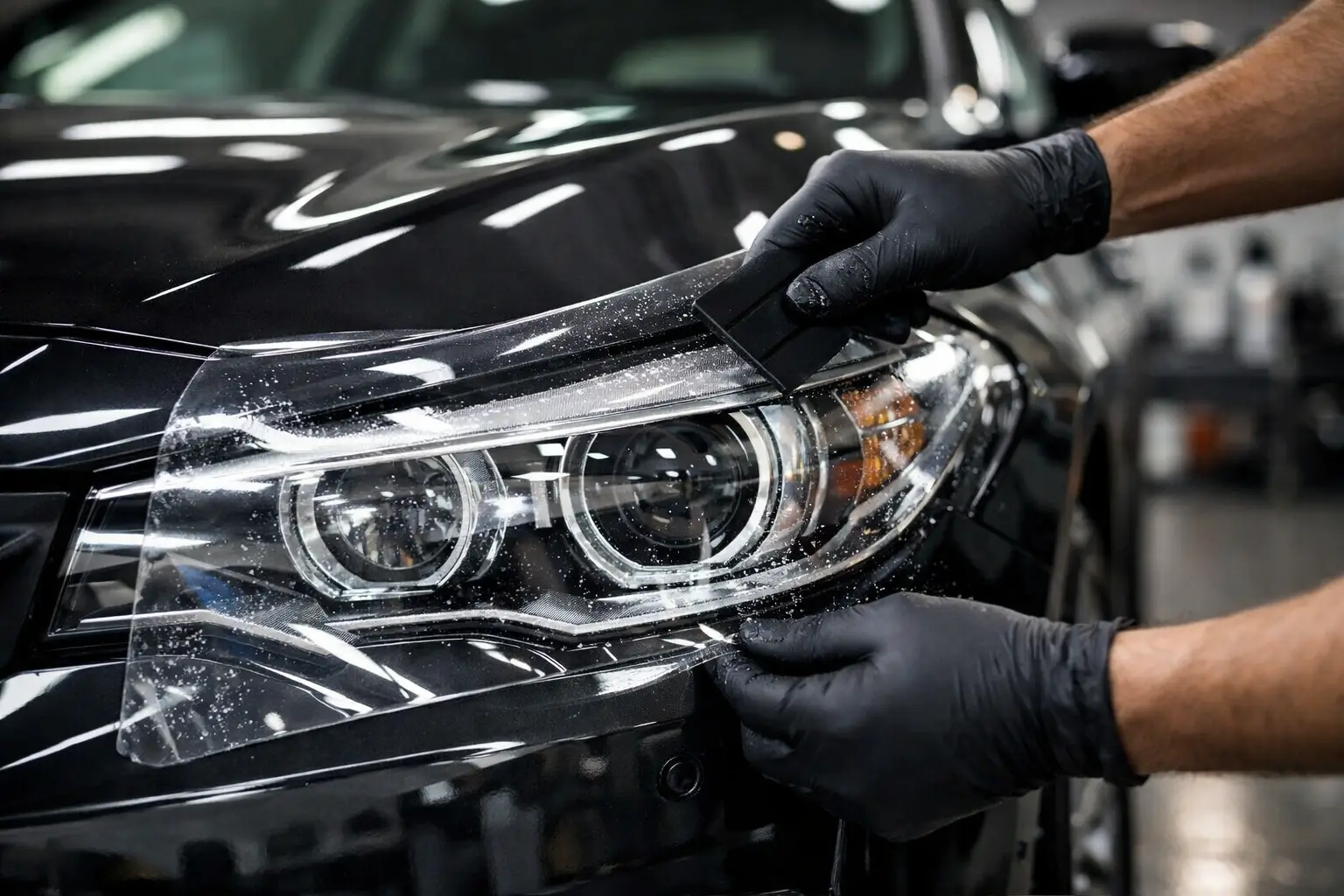
A cracked or hazy headlight can make an otherwise well-kept vehicle look older than it is. More importantly, damaged lenses reduce light output when you need it most. This headlight protection film guide explains how clear paint protection film helps preserve modern headlights from chips, scratches, UV exposure, and the harsh road conditions Metro Detroit drivers see year-round.
What Is Headlight Protection Film?
Headlight protection film is a transparent urethane film applied directly over the exterior lens. It works much like paint protection film on a hood, bumper, or mirror cap: the film takes the impact from everyday road hazards before the lens does.
Quality film is designed to remain optically clear while adding a sacrificial barrier against gravel, salt, sand, insects, and wash-induced scratching. Many premium films also include self-healing top coats. When the surface picks up light swirl marks or fine scratches, heat from sunlight or warm water can help the top layer recover its smooth appearance.
The goal is not to make headlights invincible. A hard, direct impact can still damage a lens, especially at highway speeds. The practical value is reducing the small, repeated damage that eventually leaves headlights pitted, dull, and expensive to replace.
Why Modern Headlights Need Extra Protection
Most modern headlights use polycarbonate lenses rather than glass. Polycarbonate is lightweight and impact-resistant, but it is still vulnerable to UV degradation and surface abrasion. Once the factory protective coating wears down, oxidation can accelerate. That is when lenses begin to yellow, haze, or develop a rough texture.
Road conditions make a difference. Winter driving in Livonia and across Metro Detroit means salt, slush, sand, and debris are constantly being thrown toward the front of the vehicle. In warmer months, highway construction zones, loose aggregate, and bug residue add more wear. A vehicle that spends most of its time on local roads may see moderate damage over time, while a daily commuter or performance vehicle driven frequently on expressways may benefit more quickly from film coverage.
Replacing a complete LED or adaptive headlight assembly can be far more expensive than replacing an older halogen housing. On many newer vehicles, the headlight is not simply a bulb and lens. It can contain sensors, leveling motors, daytime running light modules, and advanced electronics. Protecting the lens helps protect the appearance and usable life of a costly assembly.
Headlight Protection Film Guide: What It Protects Against
Clear film is most effective against the damage that happens gradually and repeatedly. It helps shield lenses from small rock chips, road grit, bug splatter, light scratches, and contamination that can etch or stain an unprotected surface.
It also provides a layer of UV defense. Film cannot reverse oxidation that is already inside the lens or restore a badly deteriorated housing by itself. However, when installed on a new or properly restored headlight, it can help slow the conditions that lead to future yellowing and dullness.
There is also an appearance benefit. Protected lenses tend to maintain a smoother, glossier surface, which helps the front end of the vehicle continue to look clean and well maintained. For owners preparing to sell, return a lease, or preserve a newer vehicle, that detail can matter more than expected.
Clear Film Versus Tinted Headlight Film
Clear protection film is the best choice for drivers who want protection without changing the factory appearance or reducing visible light output. It is designed to be nearly invisible when installed correctly.
Tinted headlight film is primarily a styling modification. It can create a smoked appearance, but darker films may reduce light output and can create legal or inspection concerns depending on the tint level and local requirements. If nighttime visibility and compliant road use are priorities, clear film is the more practical option.
When Headlight Film Makes the Most Sense
The best time to apply film is when headlights are new or in excellent condition. Installing it early preserves the original finish and avoids trapping existing defects beneath the film.
That said, older headlights can often be protected after professional restoration. If oxidation is limited to the outer surface, correction and polishing can restore clarity before film is installed. This combination is especially valuable for vehicles with otherwise healthy headlight assemblies that have started to show early haze.
Film may not be the right solution when a lens has deep internal cracking, moisture intrusion, severe crazing, or oxidation beneath the outer surface. Those issues can require headlight replacement. A professional inspection should identify whether restoration and protection are realistic or whether the housing itself has reached the end of its service life.
Professional Installation Versus DIY Kits
Precut DIY kits can be a reasonable option for an owner who is comfortable working with film, has a clean workspace, and accepts that the finish may not be perfect. They are often less expensive upfront, but the process requires careful alignment, proper slip solution, edge management, and patience around curves.
Headlights are more complex than they look. Their curved shapes, sharp edges, recesses, and tight gaps can make stretching film difficult. Poor installation can leave fingers, lifted edges, trapped contamination, or visible distortion. Those areas are more likely to collect dirt and fail early.
Professional installation offers cleaner preparation, precise patterns or custom coverage, controlled application, and a better finish around edges. It also provides the opportunity to correct minor defects before the film goes on. At MYNT Customs, the focus is on applying protection in a way that keeps the vehicle looking factory-clean rather than visibly covered.
How Long Does Headlight Protection Film Last?
Longevity depends on film quality, installation quality, parking habits, climate, and how the vehicle is maintained. Premium paint protection film can provide years of coverage when properly installed and cared for. A vehicle stored indoors and washed carefully will generally keep the film looking better longer than one parked outside through every season.
The leading edges of the front end naturally take more abuse than other areas. Eventually, film may show impact marks, staining, or edge wear. The advantage is that the film can be removed and replaced while the original lens underneath remains in better condition than it would have been without protection.
A warranty can be useful, but it should not be the only deciding factor. Ask what is covered, whether yellowing, cracking, peeling, or delamination are included, and whether the installer will inspect the condition of the lenses before applying the film.
Caring for Protected Headlights
Once the film has cured, normal washing is straightforward. Use pH-balanced car soap, clean microfiber towels, and careful drying techniques. Avoid using abrasive compounds or aggressive polishing pads on the film unless a professional recommends them.
Do not pick at an edge if you notice contamination nearby. Film edges can collect a faint line of dirt over time, particularly around tight contours. Gentle washing usually handles normal buildup. If an edge begins to lift, address it early so moisture and debris do not work underneath the film.
Ceramic coating can be applied over compatible protection film to improve water behavior and make routine cleaning easier. It is not a replacement for film impact protection, but the two services can complement each other when the goal is a cleaner, easier-to-maintain front end.
Is It Worth Protecting Only the Headlights?
Headlight film is a smart standalone option when lenses are the immediate concern, particularly on a vehicle with expensive lighting assemblies. It is also an effective addition to a front-end protection package.
For the most complete defense against road debris, many owners pair headlight coverage with film on the bumper, hood, fenders, and mirror caps. The right coverage level depends on how the vehicle is driven, where it is parked, its paint condition, and the owner’s budget. A daily driver does not always need full-vehicle film, but protecting high-impact areas can deliver strong value.
Clear headlights do more than improve curb appeal. They support safer nighttime driving, help preserve a vehicle’s premium look, and protect one of the most exposed components on the front end. If your lenses are still clear, protecting them now is usually the simplest way to keep them that way.