Is Ceramic Coating for Winter Driving Worth It?
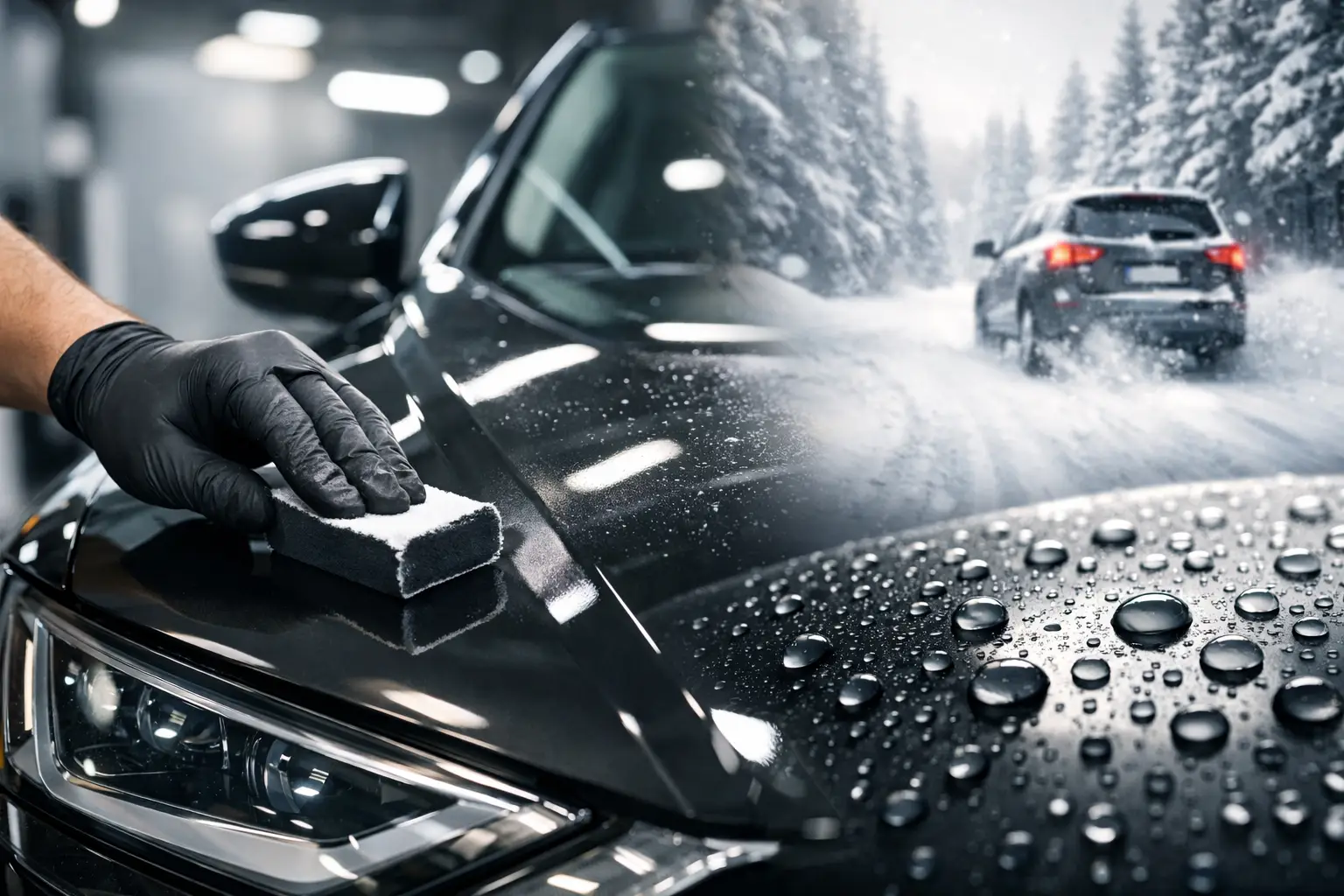
The first salty commute of a Metro Detroit winter can leave a clean vehicle covered in white residue before the day is over. Ceramic coating for winter driving gives that contamination less opportunity to cling to painted surfaces, wheels, trim, and glass. It will not make a vehicle invincible, but it can make winter cleanup easier and help preserve the finish through a season that is hard on every exterior surface.
For drivers who care about appearance, resale value, or simply not spending every weekend battling road grime, the value is practical. A professionally applied coating creates a durable, hydrophobic layer that changes how water, slush, and contaminants behave on the vehicle. The result is a vehicle that is easier to maintain when salt spray, brine, and dirty snow are part of the daily drive.
What Winter Roads Do to Your Vehicle
Michigan winter roads are not just wet. Road agencies use rock salt and liquid brine to improve traction and melt ice, and both are carried onto your vehicle by passing traffic, puddles, and slush. As moisture dries, it can leave behind a concentrated residue that looks dull, feels gritty, and can work its way into areas that are difficult to clean.
Paint is not the only concern. Wheels accumulate heavy brake dust and salt deposits. Lower doors, rocker panels, bumpers, and rear hatch areas take a constant hit from road spray. Gloss-black trim, chrome, and painted mirror caps can show staining quickly. If contaminants remain in place for extended periods, they can contribute to oxidation, staining, and premature wear on vulnerable surfaces.
A ceramic coating does not replace routine washing, but it reduces the grip that contamination has on a protected surface. That matters most during the months when a vehicle gets dirty quickly and a thorough wash is not always convenient.
How Ceramic Coating for Winter Driving Helps
The primary benefit is easier cleaning. A quality ceramic coating creates a slick surface with strong water repellency. When water beads and releases more easily, slush and road grime are less likely to bake onto the paint between washes. Many owners notice that the vehicle still gets dirty in winter, but it does not look neglected as quickly and cleans up with less effort.
That same behavior can help reduce the risk of salt residue sitting directly against unprotected paint for long periods. The coating acts as a sacrificial protective barrier between the vehicle's clear coat and everyday contamination. It is particularly useful on dark paint, where winter film and mineral spotting are immediately visible.
Ceramic coatings also improve gloss and clarity. Winter light can make dull paint look even flatter, especially after repeated exposure to grime and automatic car washes. A properly prepared and coated vehicle has a deeper, cleaner appearance that remains easier to maintain through the season.
For daily drivers, wheel coatings can be one of the most noticeable upgrades. Winter wheel cleaning is difficult because brake dust, road salt, and slush build up fast. Protecting the wheel faces and barrels makes regular maintenance more manageable and helps preserve the finish on factory, aftermarket, and performance wheels.
What a Ceramic Coating Will Not Do
A ceramic coating is serious surface protection, but it is not a substitute for paint protection film or careful driving. It will not prevent rock chips from highway debris, stop a shopping cart from denting a door, or protect against deep scratches. Winter sand, gravel, and debris can still impact the front bumper, hood, mirrors, and rocker panels.
This is where the right protection plan depends on how and where you drive. If your vehicle sees frequent freeway miles, construction zones, or salted roads throughout Metro Detroit, paint protection film is often the stronger option for high-impact areas. PPF is designed to absorb physical impacts that a ceramic coating cannot.
Many owners choose a combined approach: PPF on the front bumper, hood, fenders, mirror caps, and rocker panels, followed by ceramic coating over the rest of the vehicle. This provides impact resistance where it matters most and easier maintenance across the entire exterior. It is a higher initial investment, but it can be a smart fit for new vehicles, luxury vehicles, leased vehicles, and owners planning to keep a vehicle for years.
Preparation Determines the Result
The best coating product cannot correct poor preparation. Before coating, the paint should be thoroughly washed, chemically decontaminated, and inspected. Embedded iron particles, tar, old wax, and bonded contamination need to be removed so the coating can bond correctly.
Paint correction may also be worthwhile before application. Ceramic coating enhances the surface beneath it, which means it can make existing swirls, scratches, and haze more noticeable if they are not addressed first. On a newer vehicle, a light polish may be enough. Older vehicles or vehicles that have been through many automatic washes may need more involved correction to restore clarity.
Professional installation also gives the coating appropriate curing conditions. Temperature, humidity, paint condition, application technique, and cure time all influence longevity and appearance. This is especially relevant in winter, when outdoor temperatures can make at-home application inconsistent or impractical.
Winter Care Still Matters After Coating
A coated vehicle should still be washed regularly. During active salt season, every one to two weeks is a sensible target for most daily drivers, with more frequent washing after major storms or extended highway travel. The goal is not to chase a perfect finish every day. It is to remove salt and grime before buildup becomes harder to manage.
Touchless washes are often a practical option when temperatures are low, especially if a hand wash is not realistic. Choose a wash that includes an underbody rinse when possible, since salt accumulation beneath the vehicle is a major winter concern. Avoid using dirty brushes on paint, and be cautious with tunnel washes that use aggressive friction materials.
After washing, dry door jambs, fuel doors, trunk seals, and mirrors when conditions allow. This reduces the chance of frozen doors and prevents water from sitting in crevices. A quick microfiber wipe on lower panels can also remove remaining residue that a wash may miss.
Do not assume water beading is the only sign of protection. Hydrophobic behavior can be temporarily muted by road film, minerals, or traffic grime. A proper wash and periodic decontamination can restore the coating's performance without the need to apply waxes or heavy sealants over it.
Is It Worth It for Your Vehicle?
Ceramic coating makes the most sense for owners who want a consistently cleaner-looking vehicle and are willing to maintain it. It is well suited to new cars, well-kept daily drivers, luxury vehicles, and vehicles being prepared for resale. It also offers real value for leased vehicles, where protecting exterior condition can help avoid preventable wear at turn-in.
The investment may be less compelling for a vehicle that rarely gets washed, already has severe paint failure, or is expected to be traded in quickly with little concern for condition. In those cases, professional detailing and targeted paint correction may deliver a better immediate return.
For a vehicle you value, ceramic coating is not about avoiding winter entirely. It is about making winter less punishing on the finish and less demanding on your time. Before the next stretch of salted roads arrives, consider which surfaces need easier cleaning, which areas need impact protection, and how you want your vehicle to look when spring finally returns.