Can Detailing Remove Smoke Smell From a Car?
A smoke odor can make an otherwise clean vehicle feel worn out the moment you open the door. So, can detailing remove smoke smell? In many cases, yes - but only when the detail addresses the residue and contaminated materials causing the odor, not just the air inside the cabin.
Smoke is persistent because it is not one isolated problem. It leaves behind oily residue, fine particles, and odor compounds that settle into cloth seats, carpet, headliners, seat belts, vents, and even the cabin air filter. A quick interior wipe-down or a hanging air freshener may improve the first impression, but it rarely solves the source.
For drivers preparing a vehicle for resale, returning a lease, or simply trying to enjoy their daily driver again, professional odor removal can make a major difference. The result depends on the severity of the smoking history, the materials in the vehicle, and whether the process is thorough enough to reach every affected area.
Can Detailing Remove Smoke Smell Completely?
Professional detailing can often remove or greatly reduce smoke odor, especially when the vehicle has been cleaned before the contamination becomes deeply embedded. The key is a systematic interior reconditioning process that removes residue from surfaces and extracts contaminants from soft materials.
A true smoke-odor service is more involved than vacuuming, shampooing the carpet, and spraying fragrance. Technicians need to clean the areas smoke residue reaches - including places most owners never think to touch. That can include the upper portion of the glass, door panels, trim, seat tracks, center console, visor area, and the headliner.
The word "completely" requires some honesty. If a car was smoked in heavily for years, smoke may have penetrated deteriorated foam, insulation, fabric backing, or the HVAC system. In those cases, detailing is still the correct first step, but a perfect outcome may require replacing certain components, such as a cabin air filter or severely contaminated upholstery padding.
Why Smoke Odor Is So Difficult to Remove
Cigarette, cigar, and cannabis smoke do not behave like a spilled drink that stays in one location. Smoke travels through the cabin and attaches to nearly every porous surface. Heat makes the issue worse. On a warm day, embedded residue can release odor again, even if the car seemed fine after it was initially cleaned.
Fabric interiors usually hold more odor than leather interiors, but leather is not immune. Leather seats have seams, perforations, padding, and surrounding trim that can retain residue. Headliners are another challenge. They are close to the source of rising smoke, yet they must be cleaned carefully because excessive moisture or aggressive agitation can damage the adhesive holding the material in place.
The HVAC system can also reintroduce odor each time the fan turns on. Smoke particles can settle in the cabin air filter and ductwork, which is why an odor treatment that ignores the ventilation system may produce incomplete results.
What Professional Smoke Odor Removal Should Include
The most effective approach combines cleaning, extraction, and targeted odor neutralization. Each step handles a different part of the problem.
First, the interior needs a detailed dry clean and vacuum. Ash, dust, pet hair, and debris can trap odor and prevent cleaning products from reaching the material below. Technicians then clean hard surfaces to remove the film that smoke leaves on plastic, vinyl, leather, glass, and trim. That film is often noticeable on the inside of the windshield, where it can create haze and glare at night.
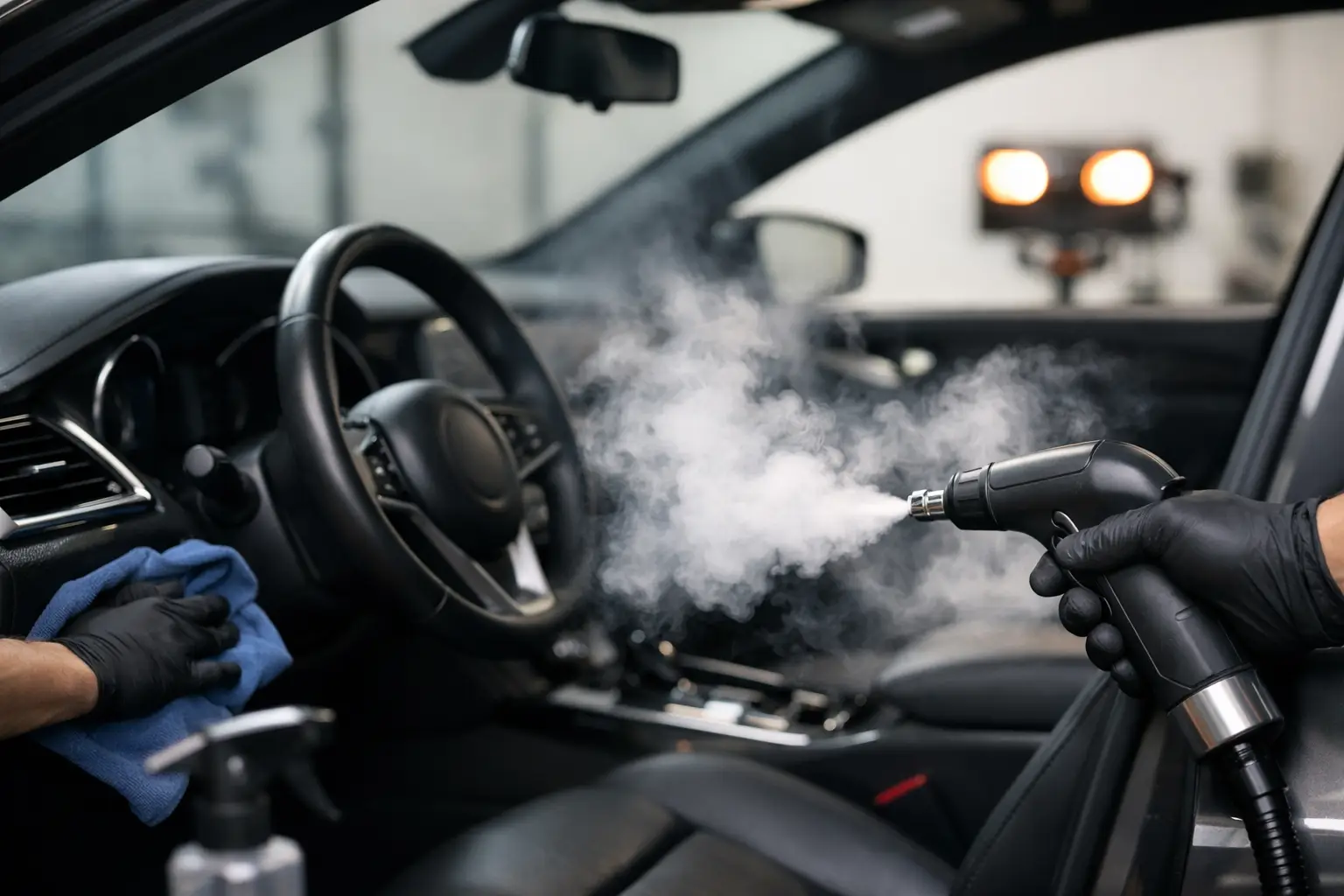
Next comes fabric and carpet treatment. Professional-grade cleaners and extraction methods lift embedded soils and residue from seats, carpet, floor mats, and trunk liners. Steam may be appropriate for certain surfaces, but it must be used with control. Too much heat or moisture can damage sensitive materials or leave an interior damp, creating a separate odor concern.
The HVAC system should be evaluated as part of the service. Replacing the cabin air filter is commonly recommended when smoke odor is present. Depending on the vehicle and odor level, technicians may also use a dedicated ventilation treatment to address contaminants circulating through the system.
Finally, an odor-neutralizing treatment can be used after the residue has been removed. This is where specialized methods such as hydroxyl or ozone treatment may be considered by trained professionals. These treatments are not substitutes for cleaning. They work best after the interior surfaces and textiles have been properly reconditioned.
Odor neutralization is not fragrance
A strong scent can temporarily cover smoke smell, but it does not remove smoke residue. In fact, heavy fragrances often create an unpleasant mix of perfume and stale smoke once they fade.
A quality result should leave the cabin smelling clean and neutral, not artificially scented. That matters for resale as well. Buyers tend to notice when a vehicle smells like it is hiding something.
When Detailing May Not Be Enough
Some vehicles need more than a standard interior detail because the smoke contamination has reached beyond cleanable surfaces. This is more likely in older vehicles, cars used for heavy daily smoking, or vehicles with water leaks that have allowed odor to settle into damp materials.
Replacement may be the practical solution when foam cushions, carpet padding, insulation, or a headliner are saturated with odor. In extreme cases, removing seats and carpet may be necessary to inspect and treat the materials underneath. A professional shop should explain this possibility upfront rather than promise a guaranteed outcome before seeing the vehicle.
There are also cases where another odor is being mistaken for smoke. Mold, spilled food, pet contamination, and a failing HVAC component can all create a stale cabin smell. Accurate diagnosis protects you from paying for the wrong treatment.
What You Can Do Before a Smoke Odor Appointment
You do not need to attempt a full DIY odor removal before bringing in your vehicle. In fact, some over-the-counter products can make professional evaluation harder by adding heavy fragrance or leaving residue behind.
You can help by removing personal belongings, emptying ashtrays, and being clear about the vehicle's history. Let the detailer know whether smoking was occasional or daily, whether the odor becomes stronger with the heat on, and whether you have already tried sprays, bombs, or shampooing. These details help determine how extensive the treatment needs to be.
Avoid using household cleaners on headliners, electronics, leather, or interior screens. The wrong product can stain fabric, dry out leather, or leave a sticky surface that attracts more dust.
How Long Will the Results Last?
When the odor source has been properly removed, the improvement should last. The biggest risk is reintroducing smoke into the vehicle after treatment. Even occasional smoking can quickly bring odor back because a freshly cleaned interior has no lingering scent to mask it.
Ongoing maintenance also matters. Replacing cabin air filters on schedule, cleaning spills promptly, and having the interior professionally maintained keeps the cabin fresher and protects the condition of materials that affect resale value.
For Metro Detroit owners, smoke odor removal can be especially worthwhile before listing a vehicle, returning a lease, or adding protective upgrades to a newly acquired car. A clean, neutral interior makes every other appearance improvement feel more complete.
At MYNT Customs, the goal is not to cover up a vehicle's history for a day. It is to restore a cleaner, more comfortable cabin through careful reconditioning and a realistic plan for the condition of the materials. If smoke odor is affecting how you feel about your vehicle, have the interior assessed before assuming it is permanent.