Best Paint Protection Options for Your Car
A new vehicle can collect paint damage faster than most owners expect. Gravel on I-96, construction debris, winter road salt, UV exposure, parking lot scuffs, and improper washing all work against the finish. The best paint protection options do not all solve the same problem, which is why choosing coverage based on how and where you drive matters more than choosing the product with the biggest claim.
For Metro Detroit drivers, the right protection often comes down to three questions: Do you want a deeper shine and easier maintenance? Do you need physical protection from rock chips? Or do you want both? Understanding the strengths and limits of wax, sealants, ceramic coatings, and paint protection film helps you invest where it counts.
Best Paint Protection Options Compared
Each option creates a different type of defense. Some improve water behavior and gloss. Others act as a physical barrier between your paint and the road. A quality installation and proper paint preparation make just as much difference as the material itself.
Car wax: short-term shine with regular upkeep
Carnauba wax remains a solid choice for owners who enjoy maintaining their vehicle and want a warm, glossy appearance. It can make paint look richer, improve water beading, and provide a modest barrier against environmental fallout.
Its limitation is durability. Wax typically lasts weeks to a few months, depending on the product, weather, wash routine, and whether the vehicle is parked outdoors. Michigan winters, frequent rain, and automatic car washes can shorten that window quickly. Wax is best for garage-kept vehicles, seasonal cars, or drivers who are comfortable reapplying protection several times a year.
Wax does not prevent rock chips, scratches, or etching from contaminants left on the surface too long. Think of it as appearance-focused maintenance, not long-term armor.
Paint sealants: practical protection on a budget
Synthetic paint sealants offer longer-lasting protection than traditional wax, commonly several months under normal use. They create a slick finish that helps water, dirt, and road grime release more easily during washing. Many sealants also provide reliable UV protection, which is useful for vehicles parked outside every day.
A sealant is a practical fit for daily drivers that need an affordable improvement in gloss and maintenance. It is also a reasonable option for leased vehicles, especially when the goal is to keep the paint presentable without making a larger long-term investment.
Like wax, a sealant is not designed to stop impact damage. It can reduce staining and make cleaning easier, but a pebble at highway speed can still chip the paint underneath.
Ceramic coating: lasting gloss and easier maintenance
Ceramic coating is one of the most popular choices for owners who want their vehicle to stay cleaner, look glossier, and resist everyday contamination. Professional-grade coatings chemically bond to the clear coat, creating a durable, highly hydrophobic surface. Water beads and sheets more effectively, dirt is less likely to stick, and routine washing becomes easier.
The visual benefit is immediate. Properly prepared paint often gains deeper color, stronger reflections, and a more polished finish. Ceramic coating also helps protect against UV fading, bug residue, bird droppings, tree sap, light chemical exposure, and mineral deposits when those contaminants are removed promptly.
However, ceramic coating is frequently misunderstood. It is not a force field against rock chips, deep scratches, or parking lot impacts. It can offer some resistance to light wash marring, but it cannot replace paint protection film in high-impact areas.
The condition of the paint before coating is critical. Coating over swirl marks, haze, or scratches preserves those defects beneath the coating. Paint correction before installation may be the right step for a used vehicle or a new car with dealership-installed wash marks. The goal is to lock in a finish worth protecting.
Paint protection film: the strongest defense against chips
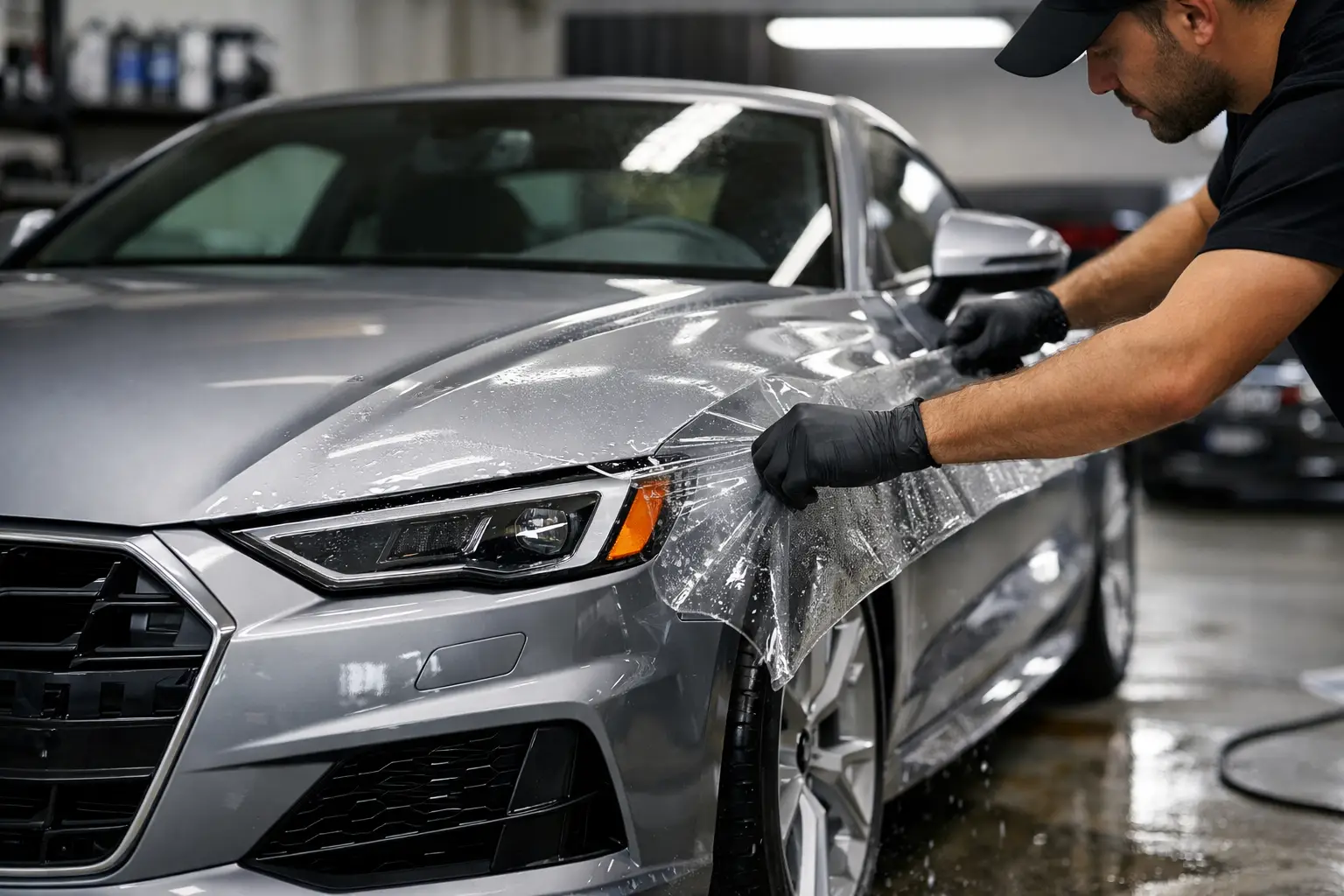
Paint protection film, often called PPF or clear bra, is the best choice when physical impact protection is the priority. This transparent urethane film is applied over painted surfaces to absorb and disperse the energy from road debris. It is especially valuable on the front bumper, hood, fenders, mirrors, rocker panels, and behind the wheels, where chips and abrasion occur most often.
High-quality PPF can also offer self-healing properties. With heat from sunlight or warm water, light surface scratches in the film can become less visible. The film adds a noticeable layer of protection without changing the vehicle's factory color, and it can be removed later without harming properly maintained original paint.
PPF is a premium investment because the material and installation require precision. Body lines, panel edges, sensors, badges, and complex bumper shapes all demand careful work. A poor installation can leave visible lines, trapped debris, lifted edges, or unnecessary seams. Experienced preparation and installation are essential.
Full-front PPF is a strong value for performance vehicles, luxury vehicles, trucks, and daily drivers that spend significant time on highways. For owners seeking maximum preservation, full-body PPF protects nearly every painted surface from the wear that builds up over years of ownership.
Ceramic Coating vs. PPF: Which One Do You Need?
Ceramic coating and PPF are not competing products in every situation. They serve different purposes, and the strongest protection package often uses both.
Choose ceramic coating when your main goals are gloss, easier washing, hydrophobic performance, and resistance to environmental contamination. It is well suited to owners who want a consistently clean presentation and are willing to follow a proper wash routine.
Choose PPF when preventing chips, scratches, and road rash is the priority. If you drive frequently on freeways, follow trucks, commute through construction zones, or own a vehicle with low front-end clearance, physical film protection should be high on the list.
A common high-value approach is PPF on the vulnerable front-facing areas, followed by ceramic coating across the rest of the exterior. The film handles impact zones while the coating improves gloss and simplifies maintenance across the vehicle. This combination is especially effective for new vehicles, where protecting the factory finish from day one can support long-term condition and resale appeal.
How to Choose Protection for Your Vehicle
Start with your driving reality, not just your vehicle type. A luxury SUV driven 20,000 miles per year through Metro Detroit road conditions may need more front-end protection than a weekend sports car that stays in the garage. Conversely, a carefully driven show vehicle may benefit most from paint correction and ceramic coating rather than full-body film.
Your ownership timeline matters, too. If you plan to keep a vehicle for several years, PPF and ceramic coating can help preserve a cleaner, more consistent finish over that period. For a short lease, a paint sealant or ceramic coating may provide enough maintenance benefit, while targeted PPF can make sense on especially vulnerable areas.
Paint condition should also guide the decision. A new car is not always defect-free. Transport film marks, dealership washing, rail dust, and minor swirls are common. A professional inspection identifies whether paint correction is needed before applying long-term protection.
Finally, consider maintenance honestly. Ceramic-coated and PPF-protected vehicles still need washing. The advantage is that cleaning is faster, contaminants release more easily, and the finish is better equipped to handle normal exposure. Use pH-balanced products, clean wash media, and touchless or careful hand-washing methods whenever possible. Avoid harsh brushes and neglected automatic washes, which can mar any finish over time.
Protection Is Most Effective Before Damage Starts
Waiting until chips, stains, and swirls appear usually means paying for correction before protection can be installed. Protecting a vehicle early gives you the best chance to preserve the clarity, color, and value of the original finish.
At MYNT Customs, the right recommendation begins with the vehicle, its condition, and how you use it. Whether that means a durable ceramic coating, targeted PPF, or a combined package, the goal is simple: keep your vehicle looking like it deserves to look every time you walk up to it.